
À la recherche d’Alpha Review 2024 :cela vaut-il l’investissement pour les investisseurs ?
Divulgation : Cette publication peut recevoir une rémunération de partenaires répertoriés via des partenariats d'affiliation, sans frais pour vous. Cela n’influence pas nos notes et les opinions sont les nôtres. Apprenez-en davantage ici.
Si vous souhaitez un examen approfondi et détaillé de Seeking Alpha, vous êtes au bon endroit.
Tout d'abord, vous découvrirez ce qu'est Seeking Alpha, comment Seeking Alpha peut être bénéfique pour vous et vos investissements, puis nous entrerons dans des détails plus détaillés, tels que :
- Les avantages et les inconvénients de Seeking Alpha
- Comment utiliser certains outils de Seeking Alpha
- Comment Seeking Alpha peut vous aider à développer votre patrimoine
Vous pouvez soit devenir membre de base de Seeking Alpha gratuitement, vous abonner au forfait Premium de Seeking Alpha (c'est ce que j'utilise), soit utiliser le forfait Pro.
Prêt à voir si Seeking Alpha est la meilleure plateforme de recherche en investissement pour vous ?
Allons-y directement.
Note globale :
Noté 4,8 sur 5
Outils personnalisés
Contenu de haute qualité
Analyse approfondie des stocks
Peut créer une dépendance
Interface complexe
Cela pourrait être écrasant
Seeking Alpha est une plateforme de recherche en investissement conçue pour les investisseurs intermédiaires à avancés qui souhaitent obtenir des informations rentables, impartiales et quantitatives.
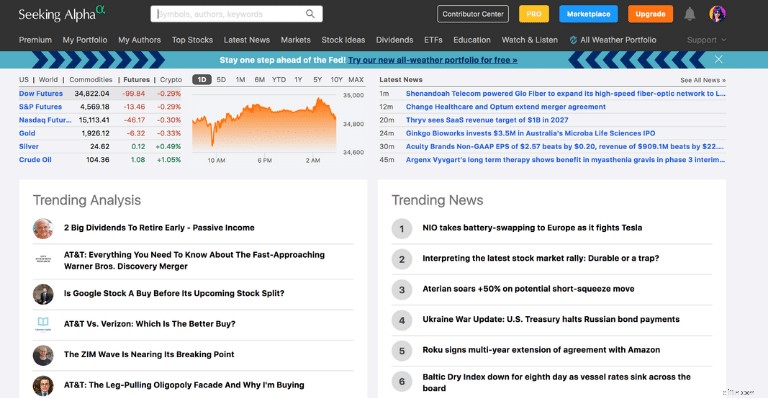
Quelques outils que vous pouvez commencer à utiliser si vous vous inscrivez à Seeking Alpha , inclure :
- Suivi de portefeuille virtuel personnalisé
- Liez et analysez votre portefeuille actuel
- Accès exclusif à l'analyse des tendances boursières
- Suivi personnalisé des performances boursières individuelles
Depuis la création de Seeking Alpha en 2004, la plateforme a attiré plus de 20 millions d'utilisateurs mensuels.
Que signifie « À la recherche d'Alpha » ?
Voici quelque chose d'intéressant que vous ne saviez peut-être pas à propos du nom Seeking Alpha :
Le terme « alpha » n'est pas seulement la première lettre de l'alphabet grec, mais il était également utilisé par les Grecs pour représenter le chiffre 1.
Le terme « alpha » est en fait également un terme financier et s'exprime par le symbole suivant :
Voici ce que signifie le terme « alpha » en termes financiers :
L'alpha d'un portefeuille est généralement exprimé sous la forme d'un nombre positif, d'un nombre négatif ou de 0.
Voici ce que signifieraient ces chiffres :
2%
Le portefeuille a surperformé le marché de 2 %
0%
Portefeuille réalisé en ligne avec le marché
-2%
Le portefeuille a sous-performé le marché de 2 %
Donc en réalité, la plateforme Seeking Alpha a un jeu de mots très astucieux avec son titre.
Seeking Alpha représente notre désir de construire un portefeuille capable de surperformer le marché.
Comment fonctionne la recherche Alpha ?
L'objectif ultime de Seeking Alpha est d'aider les investisseurs fondamentaux à partager des informations et des idées avec des investisseurs partageant les mêmes idées sur la plateforme.
Une fois inscrit et devenu membre de Seeking Alpha, vous bénéficiez d'un accès exclusif à des articles et à des newsletters rédigés par des investisseurs fondamentaux expérimentés et accrédités.

Le titre le plus élevé en matière d'investissement qu'une personne puisse obtenir (à part peut-être un doctorat) est la certification CFA.
Même si tous les auteurs ne détiennent pas le titre de CFA – ce qui est tout à fait normal – ceux qui possèdent le titre de CFA sont également d'excellents candidats dont on peut apprendre.
Même si vous bénéficiez du forfait gratuit de Seeking Alpha, vous pouvez toujours avoir accès à :
- Commentaires détaillés sur vos actions préférées
- Accès aux outils exclusifs de classement des actions de Seeking Alpha
- Analyse de stock publiée et approfondie (jusqu'à 5 articles gratuits par mois)
Jetez un œil à un extrait des nombreux articles publiés quotidiennement :
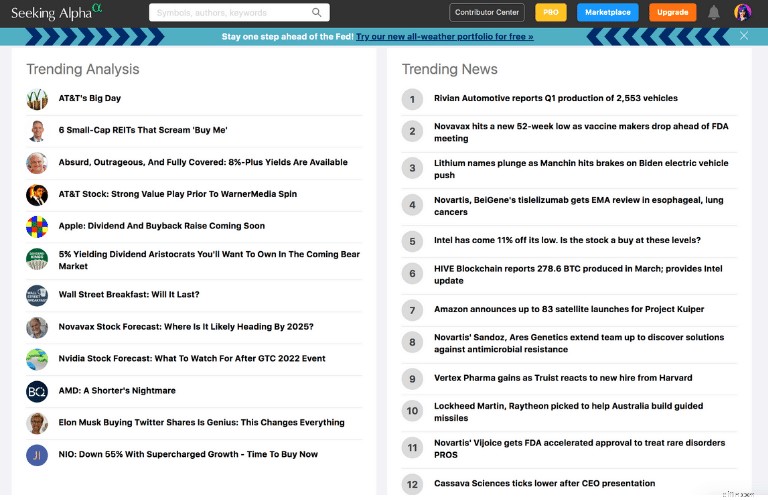
En fait, Seeking Alpha compte plus de 7 000 auteurs actifs et expérimentés qui publient plus de 10 000 critiques approfondies chaque mois.
Ces auteurs se penchent en profondeur sur les actions , examinant les données financières de chaque entreprise et donnant sa propre opinion sur la question de savoir si cette action devrait être :
- Acheter
- Vendre
- Attendez
- Forte vente
- Achat fort
Désormais, en plus d'apprendre de vos pairs investisseurs professionnels sur chaque action, Seeking Alpha vous donne également la possibilité de faire vos propres recherches.
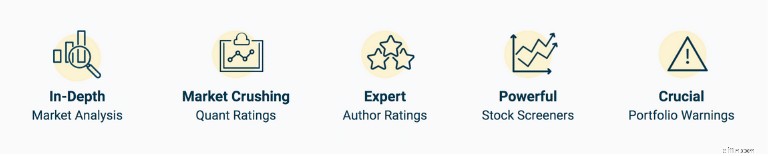
Voici quelques outils de recherche intéressants accessibles à tous les membres Premium et Pro :
- Sélectionneur d'ETF personnalisé
- Analyse de portefeuille personnalisée
- Suivi personnalisé des performances boursières
Nous reviendrons plus en détail sur ces outils plus loin dans l'article (alors continuez à lire !).
L'idée principale ici est que Seeking Alpha vous offre le meilleur des deux mondes :vous pouvez apprendre de vos pairs et interagir avec eux, ainsi qu'acquérir une expérience pratique en matière de recherche en investissement.
À la recherche des avantages et des inconvénients de l'Alpha
Jetons un coup d'œil global aux avantages et aux inconvénients de Seeking Alpha (pour les options payantes) :
Peu ou pas de publicité
Cher si vous êtes un investisseur occasionnel
Accès à des newsletters quotidiennes exclusives, des interviews et des articles
Moins de couverture sur la crypto par rapport aux autres secteurs
Analyse quantitative perspicace des actions
Se concentre sur la recherche en investissement et n'automatise pas vos propres investissements
Personnalisez les alertes de stock (vous recevrez des notifications push)
La convivialité/l'interface peut prêter à confusion
Les articles participatifs vous donnent la possibilité d'interagir directement avec les auteurs
La plupart des articles et des actions sont principalement axés sur les États-Unis (et parfois le Canada)
Vous pouvez personnaliser de nombreux outils de Seeking Alpha
Cela pourrait être complexe si vous êtes un investisseur passif (pas de day trading)
À la recherche d'une note globale Alpha
Avant de poursuivre votre lecture, consultez mes notes pour chacune des 6 catégories suivantes :
Informations sur les investissements
⭐️⭐️⭐️⭐️⭐️
Outils d'investissement
⭐️⭐️⭐️⭐️⭐️
Service client
⭐️⭐️⭐️⭐️⭐️
Convivialité
⭐️⭐️⭐️⭐️⭐️
Coût
⭐️⭐️⭐️⭐️
Pour donner un peu plus de détails sur la raison de mes notes, jetez un œil à ma répartition ci-dessous :
- Informations sur les investissements – Les lecteurs reçoivent de nombreuses informations allant des newsletters quotidiennes aux évaluations boursières quantitatives, des analystes de Wall Street et de Seeking Alpha.
- Outils d'investissement – En tant que membre Premium ou Pro, vous avez accès à de nombreux outils Seeking Alpha différents. Ils peuvent toutefois être un peu difficiles à comprendre si vous êtes un investisseur occasionnel.
- Service client – J'ai personnellement parlé à 3 représentants du service client différents chez Seeking Alpha, qui étaient tous extrêmement amicaux, réactifs et corrects avec leurs informations. D'après mon expérience, l'équipe du service client de Seeking Alpha est très professionnelle.
- Convivialité – Pour quelqu’un qui est un investisseur débutant, les différents outils de Seeking Alpha peuvent sembler un peu écrasants. Toutefois, si vous êtes un investisseur intermédiaire à expérimenté et que vous savez ce que vous faites, Seeking Alpha est très simple à utiliser.
- Coût – Vous n’obtenez pas grand-chose avec la version à accès limité (c’est-à-dire gratuite), mais vous en avez pour votre argent si vous vous inscrivez à la version Premium (19,99 $ par mois). La version Pro, à mon avis, n'a de sens que si vous êtes un professionnel ou si vous êtes très sérieux en matière d'investissement actif (199,99 $ par mois)
Jusqu'à présent, je suis assez impressionné par Seeking Alpha.
À propos de la recherche d'Alpha
Seeking Alpha a été fondée en 2004 par David Jackson.
David a travaillé comme analyste de recherche sur les actions et la technologie chez Morgan Stanley pendant la bulle technologique, recherchant des actions et rédigeant ses conclusions.
C'est à cette époque que David s'est rendu compte qu'il existait un conflit d'intérêts inhérent si les grandes banques d'investissement publiaient leurs recherches sur certains produits d'investissement, en particulier si les grandes banques vendaient ces produits d'investissement.
Pourquoi une grande banque d’investissement publierait-elle un document de recherche sur un produit de qualité inférieure qu’elle vend elle-même ?
C'est ainsi qu'est né Seeking Alpha.
Voici quelques détails supplémentaires que vous devriez connaître sur Seeking Alpha :
Année de création
2004
Emplacement du siège social
Raanana, Israël
Utilisateurs mensuels
Plus de 20 millions
Spectateurs mensuels
Plus de 40 millions
Auteurs actifs mensuels
Plus de 7 000
Articles publiés mensuellement
Plus de 10 000
Coût mensuel
– Accès limité =0 $
– Prime =19,99 $
– Pro =199,99 $
Qui devrait utiliser Seeking Alpha ?
– Investisseurs intermédiaires
– Investisseurs avancés
– Day traders
Type de contenu
– Podcasts
– Contenu vidéo
– Contenu écrit
Fonctionnalités remarquables
– États financiers
– Transcriptions des appels sur les résultats
– Notifications de stock personnalisées
– Analyse approfondie d'experts
– Système transparent de notation des actions
– Tableaux comparatifs des performances boursières
Disponibilité
– iPad
– Bureau
– Android
– iPod touch
– iPhone (iOS 12.2 ou version ultérieure)
Service client
– Téléphone
– Forum
Horaires du service client
Du lundi au vendredi, de 8 h à 16 h HNE
Disponibilité dans les pays
International
Bien que Seeking Alpha soit accessible à un public international, je dois noter que la principale recherche en investissement de la plateforme se concentre sur les États-Unis et le Canada.
À la recherche de la convivialité et de l'interface Alpha
Je suis un grand fan de l’interface du site Web Seeking Alpha.
Personnellement, je pense que Seeking Alpha est très convivial, intuitif et qu'il fait également du bon travail en affichant les informations de manière organisée.
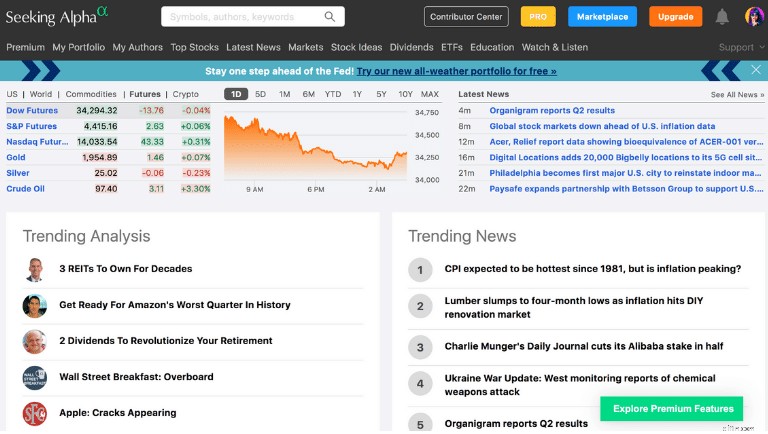
Maintenant, le seul retour constructif que j'aurais est que pour les investisseurs débutants – et même pour les utilisateurs intermédiaires – les informations sur Seeking Alpha peuvent ne pas toujours être trouvées intuitivement.
Par exemple, si vous recherchez les meilleurs ETF des marchés émergents, vous ne saurez probablement pas où chercher.
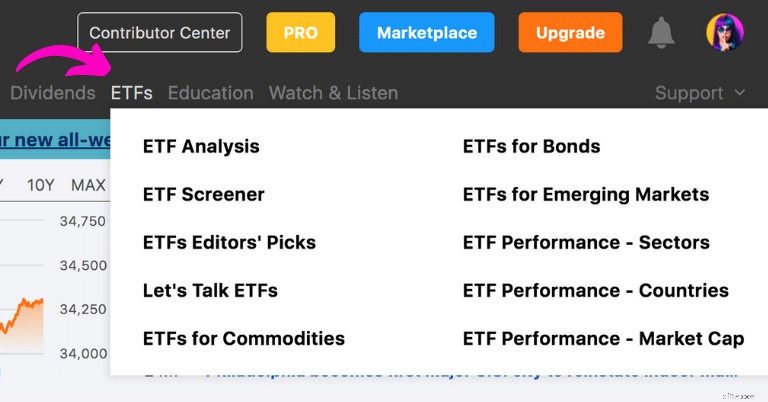
Le seul endroit logique où je rechercherais les ETF des marchés émergents serait sous l’onglet ETF – mais il n’y a toujours pas d’informations supplémentaires sur les ETF des marchés émergents.
En réalité, pour trouver les meilleurs ETF des marchés émergents, vous devrez cliquer sur « ETF Screener » et « ETF Performance – Sector ».
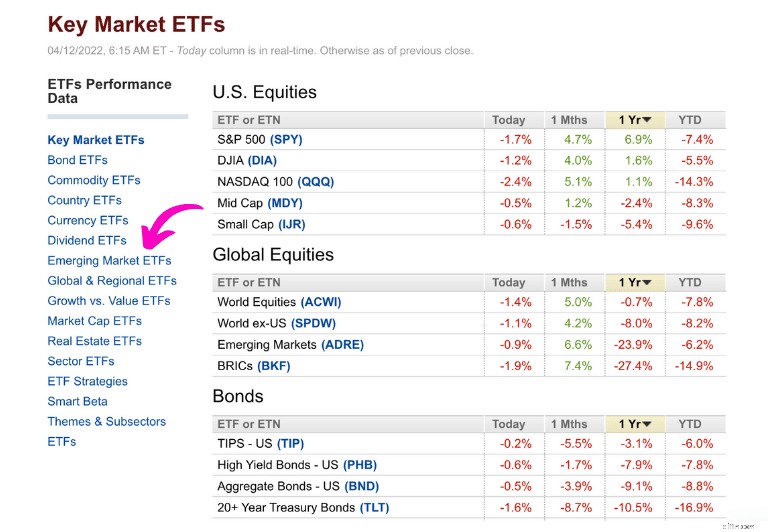
À partir de là, vous devrez cliquer sur la barre d’outils de gauche pour trier la catégorie ETF (dans ce cas, les marchés émergents) que vous recherchez.
Dans l’ensemble, Seeking Alpha a construit une fantastique plateforme de recherche fondamentale pour chaque investisseur.
Vous n'aurez probablement qu'une petite courbe d'apprentissage avant de vous familiariser pleinement avec la plateforme et son fonctionnement.
Recherche de forfaits Alpha et de tarifs
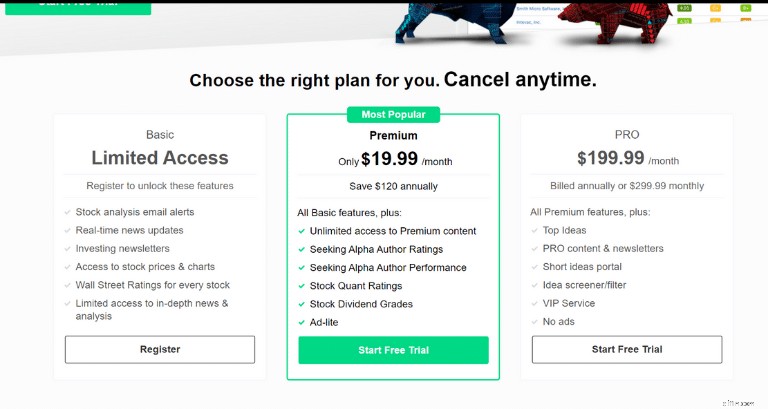
Seeking Alpha propose 3 forfaits, dont 2 sont des versions payantes :
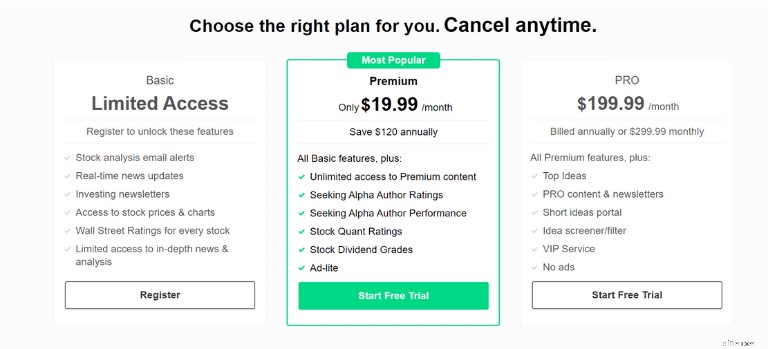
J'utilise le forfait Premium et je suis très satisfait de ses fonctionnalités et de ses fonctionnalités.
Voici ce à quoi vous pouvez vous attendre lorsque vous ouvrez un compte chez Seeking Alpha :
Coût minimum
0 $ [Forfait à accès limité]
Coût maximum
199,99 $/mois [Forfait Pro]
Modes de paiement
– PayPal
– Carte de crédit
Gardez à l'esprit que vos forfaits Premium (ou Pro) seront facturés annuellement pour couvrir les coûts mensuels de 19,99 $ (Premium) ou 199,99 $ (Pro).
Sinon, vous paieriez 29,99 $/mois (Premium) et 299,99 $/mois (Pro).
Voici un bref aperçu de ce que vous obtenez avec chaque abonnement Seeking Alpha :
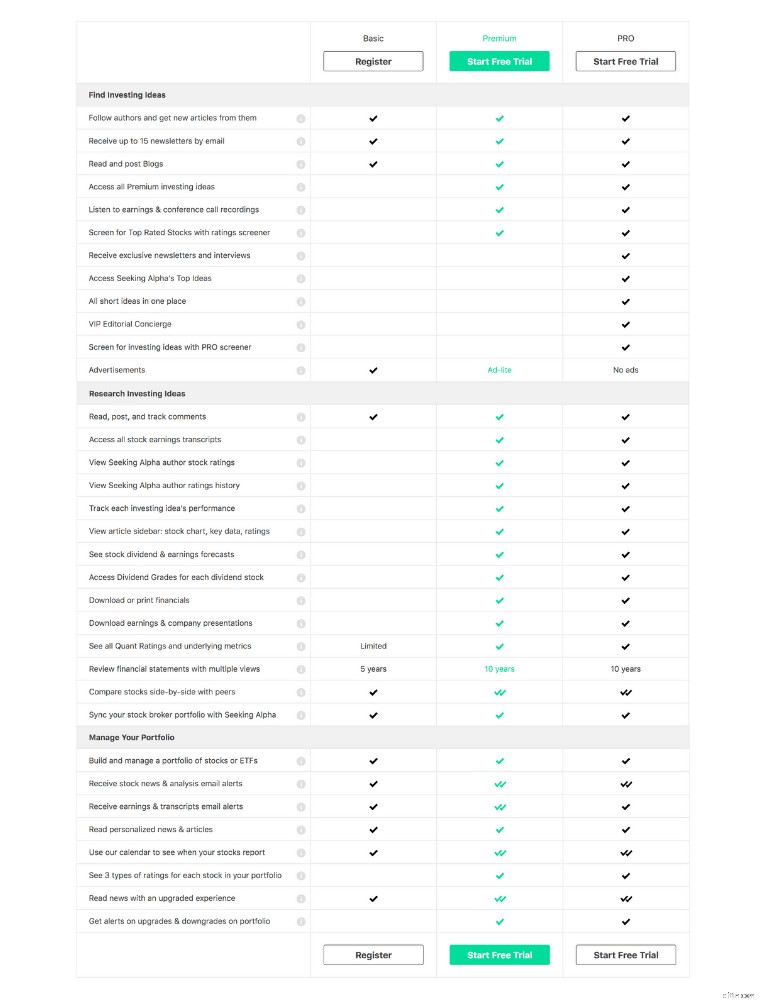
La bonne nouvelle est que vous pouvez commencer un essai gratuit de 14 jours avec le forfait Premium et même les forfaits Pro.
En règle générale, vous devriez recevoir un e-mail de rappel quelques jours avant la fin de la période d'essai, mais j'ai lu plusieurs plaintes selon lesquelles les cartes de crédit avaient été débitées juste à la fin de la période d'essai.
Continuez à lire le passage suivant, car je vais vous expliquer plus en détail chaque service et ce que vous obtenez pour votre argent.
Qui devrait souscrire aux forfaits payants Seeking Alpha ?
La valeur d'un plan Seeking Alpha dépend vraiment de vous et de vos objectifs.
Ci-dessous, j'ai décomposé un graphique simple pour vous montrer quel plan serait probablement le meilleur si vous :
Lire les articles quotidiennement
✔️
✔️
Interagissez avec les auteurs
✔️
✔️
Alertes par e-mail
✔️
✔️
Aucune publicité
✔️
Profitez d'Analytics
✔️
✔️
Vous voulez un service VIP
✔️
Vous voulez du contenu exclusif
✔️
Vous êtes un day trader
✔️
✔️
L'argent n'est pas un souci
✔️
Personnellement, je pense que le forfait Premium est parfait pour toute personne normale qui souhaite :
- Interagissez avec des personnes partageant les mêmes idées
- En savoir plus sur l'aspect technique de l'investissement
- Prendre des décisions éclairées concernant le marché boursier
À moins que vous ne soyez vraiment un day trader ou que vous dirigiez votre propre petite entreprise et que vous ayez besoin d'une touche exclusive supplémentaire, je dirais que le forfait Premium est probablement le meilleur rapport qualité-prix, compte tenu de ce que vous dépensez.
À la recherche des performances de sélection d'actions d'Alpha
Bien qu'il soit presque impossible de battre le marché de manière cohérente, Seeking Alpha vous donne certainement l'avantage de surperformer le marché.
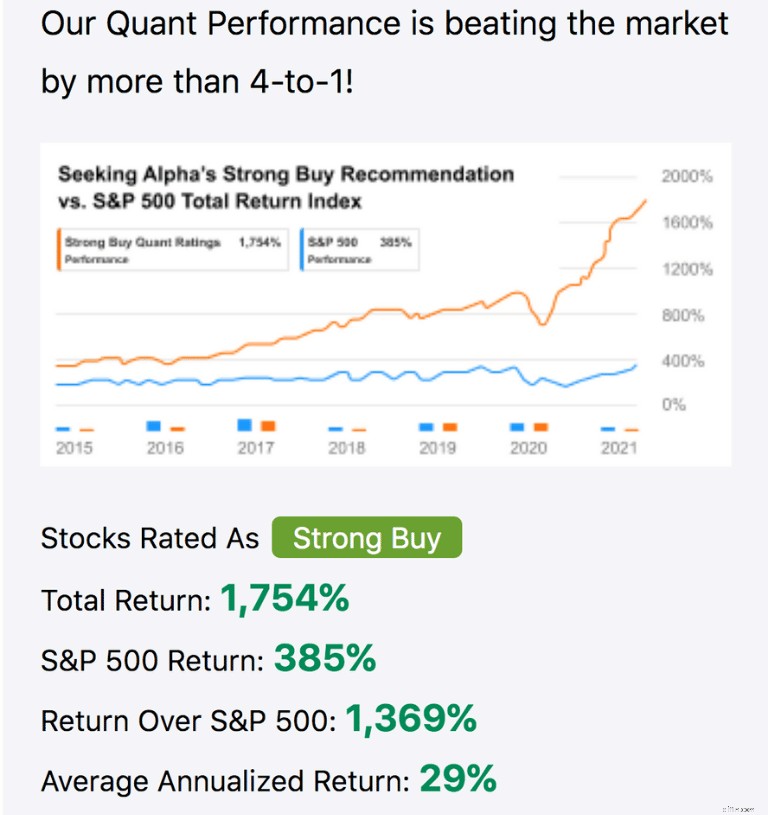
En fait, depuis 2010, l'algorithme quantitatif de Seeking Alpha a largement surperformé le S&P 500, le battant 9 fois sur 10.
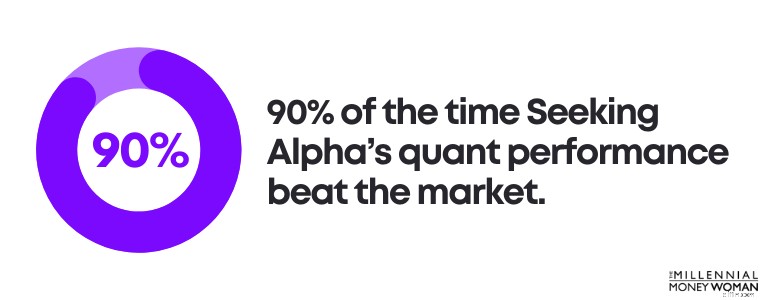
Les actions « très haussières » ont rapporté 1 754 % tandis que le S&P 500 n'a rapporté que 385 %.
Alors, comment accéder à un outil qui augmente considérablement vos chances de surperformer le marché ?
En vous inscrivant au Forfait Seeking Alpha Premium .
Pensez-y de cette façon :
- Vous commencez à investir 10 000 $ en 2010 et n'effectuez aucune contribution d'investissement supplémentaire
- Vous auriez 139 344 $ de plus si vous aviez utilisé les recommandations boursières « très haussières » de Seeking Alpha plutôt que d'investir dans le S&P 500
Gardez simplement à l'esprit que les performances passées n'indiquent pas nécessairement les performances futures.
À la recherche d'un plan d'accès limité Alpha
Si vous n'êtes pas prêt à dépenser de l'argent sur Seeking Alpha et que vous souhaitez simplement vous inscrire au forfait gratuit, consultez cette section, dédiée au forfait à accès limité :
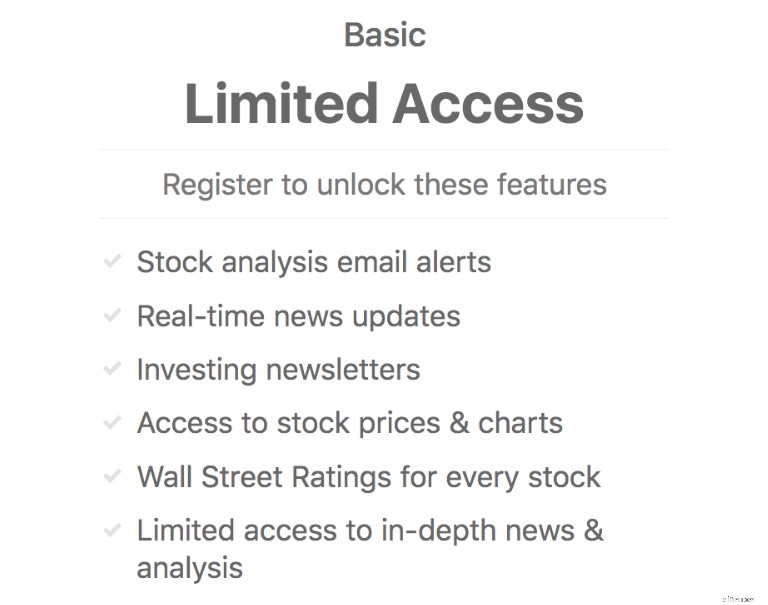
Avec le forfait Accès limité, vous pouvez notamment :
- Recevez jusqu'à 15 newsletters par e-mail
- Accéder aux relevés de notes et aux rapports sur les revenus
- Suivez et interagissez avec les auteurs de Seeking Alpha
- Accédez jusqu'à cinq articles Seeking Alpha par mois
- Connectez votre portefeuille personnel à Seeking Alpha (pour analyser vos actions)
Certains inconvénients du forfait à accès limité incluent :
- Vous serez exposé à plusieurs annonces
- Vous n'avez pas accès aux analyses d'experts
- Vous ne pouvez pas accéder à toutes les statistiques boursières sous-jacentes
- Vous avez uniquement accès aux notations de Wall Street
- Vous ne pouvez pas accéder à toutes les notations quantitatives des actions
- Vous ne pouvez examiner les états financiers que sur une période maximale de cinq ans (et non de dix)
Si vous êtes intéressé et que vous en voulez plus, envisagez de vous abonner à l'un des forfaits payants Seeking Alpha. (le Premium ou le Pro).
À la recherche d'un forfait Alpha Premium
L'avantage du plan Seeking Alpha Premium (et Pro) est que vous pouvez démarrer une période d'essai gratuite de 14 jours pour tester le plan avant de vous engager financièrement.
Vous pouvez annuler votre période d'essai à tout moment pour vous assurer de ne pas être facturé du montant total (ce que Seeking Alpha peut faire si vous n'annulez pas avant la fin de l'essai).
Si vous avez apprécié la période d'essai du forfait Premium, vous pouvez payer le forfait Premium de 3 manières :
Forfait mensuel
29,99 $/mois
Forfait annuel
239 $ (ou 19,99 $/mois, comme annoncé)
Forfait sur 3 ans
540 $ (ou 14,99 $/mois)
Il semble que le cas par défaut pour Seeking Alpha consiste à facturer d'avance le montant des primes de l'année complète (donc 239 $ pour le forfait Premium).
L'un des plus grands avantages de l'inscription au plan Premium par rapport au plan à accès limité est que vous bénéficiez d'un accès exclusif à la communauté des investisseurs, ce qui vous permet de :
- Interagir avec les auteurs
- Comparez votre portfolio aux portfolios des auteurs
- Accédez à des analyses boursières quantitatives et fondamentales approfondies
- Accédez aux conférences téléphoniques, aux appels sur les résultats, aux présentations, etc.
Je suis un utilisateur du forfait Premium et ce que j'aime le plus, c'est que vous puissiez littéralement réfléchir à des idées avec vos pairs concernant votre prochain investissement.
À la recherche des fonctionnalités Alpha Premium
Dans cette section, je vais vous expliquer en détail certaines de mes fonctionnalités préférées du forfait Premium et comment vous pouvez en bénéficier.
Voici un aperçu des fonctionnalités de Seeking Alpha Premium :
- Ad Lite
- Objectifs de prix
- Appels notables
- Appels sur les résultats
- Notes des auteurs
- Notes de dividendes
- Tableau de bord Actualités
- Tableau de bord des facteurs
- Comparaisons entre pairs
- Personnalisation des alertes
- Notes quantitatives
- Outils de sélection des actions
- Consensus de Wall Street
- Graphiques de visualisation de données
- Accès illimité aux articles
- Créez votre propre portefeuille fictif
- Gérez vos alertes de prix personnalisées
- États financiers téléchargeables
- Outil de comparaison des performances des actions
- Liez votre compte d'investissement externe
Si vous souhaitez en savoir plus sur ces fonctionnalités, continuez à lire.
Fonction n° 1 du forfait Premium : Ad-Lite
Contrairement au forfait Accès limité, qui peut contenir de nombreuses publicités, le forfait Premium offre une expérience utilisateur « ad-lite ».
A titre d'exemple, vous pouvez recevoir des bannières publicitaires tout au long de votre navigation telles que les suivantes :
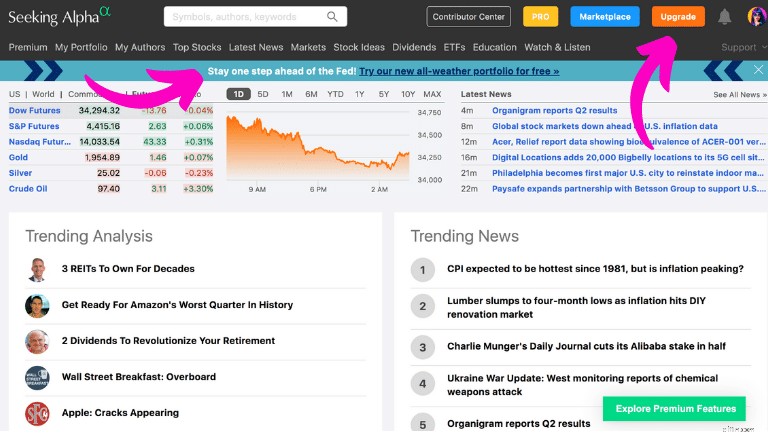
Comme vous pouvez le constater avec mon abonnement Premium, Seeking Alpha fait la promotion de certains de ses produits (dans ce cas, le forfait Pro).
Pour être honnête, ces publicités ne me dérangent pas vraiment et je ne pense pas qu'elles nuisent à mon expérience.
Fonction n°2 du forfait Premium :objectifs de prix
Vous vous demandez si une action est surévaluée ou sous-évaluée ?
Consultez les notes de Wall Street pour cette action et faites défiler jusqu'à la section « Objectif de cours ».
Dans ce cas, j'ai utilisé Google comme exemple, alors jetons un coup d'œil à l'objectif de cours de Google (et en avril 2022, Google s'échangeait à 2 595,93 $).
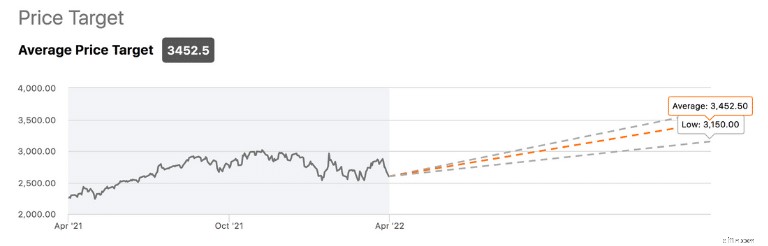
En d’autres termes, sur la base de l’objectif de cours (3 452,50 $) par rapport au coût réel de l’action (2 595,93 $), l’action Google est en réalité sous-évaluée.
C'est probablement la raison pour laquelle 98 % des analystes de la section Wall Street Ratings considèrent Google comme un « achat » ou un « achat fort ».
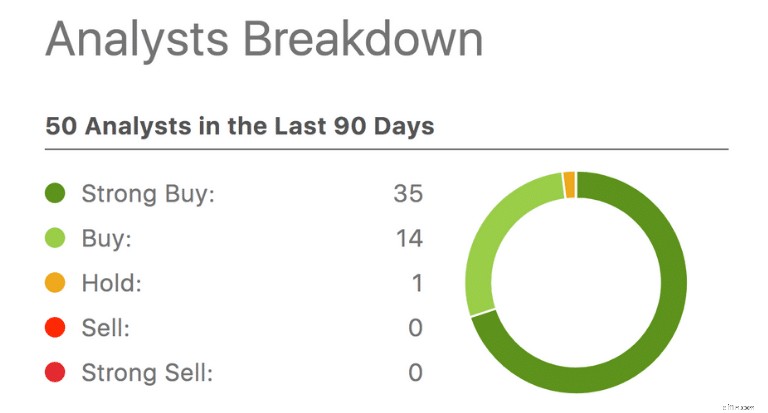
Le graphique ci-dessous est un autre exemple intéressant de fonctions d'objectif de prix.
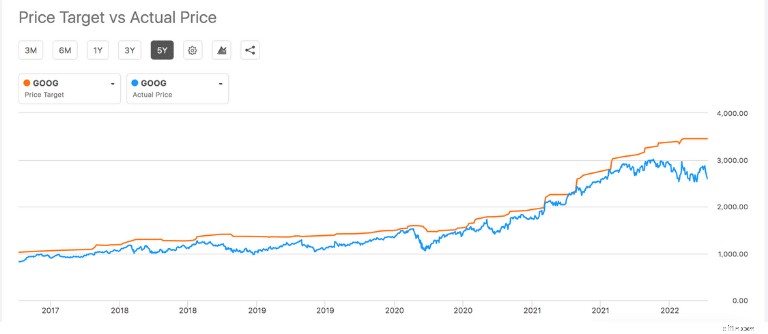
Dans le graphique Objectif de prix par rapport au prix réel, vous verrez que l’objectif de prix (en rouge) a presque toujours été un peu supérieur au prix réel de Google (en bleu).
Donc, si vous êtes un investisseur axé sur la valeur Si vous cherchez à acheter des actions actuellement sous-évaluées, vous souhaiterez peut-être considérer Google comme un investissement.
Maintenant, vous vous souvenez peut-être également du fiasco de GameStop ($ GME) au début de 2021, lorsque les traders de Reddit ont empilé de l'argent dans l'action $ GME en faillite, provoquant des obstacles financiers majeurs pour les fonds spéculatifs et les plateformes d'investissement comme Robinhood.
Oui, certaines personnes ont peut-être gagné de l’argent dans cette saga éphémère, mais elles en ont très probablement perdu.
Jetez un œil au graphique de l'objectif de prix ci-dessous, qui aurait montré à tout investisseur rationnel qu'il était risqué d'investir de l'argent dans $ GME :
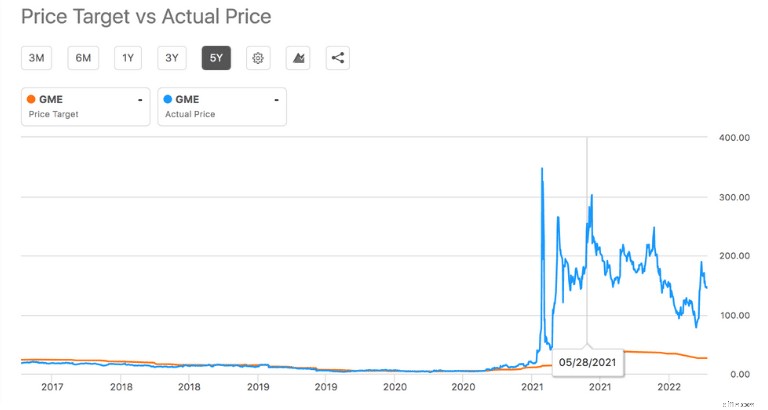
Comme vous pouvez le constater, l'objectif de prix (en rouge) a constamment oscillé autour de quelques dollars, tandis que le prix réel en $ GME a grimpé jusqu'à plus de 300 $ à un moment donné.
N'oubliez pas que se concentrer sur un seul point de données, comme l'objectif de cours, ne devrait pas être le facteur décisif pour savoir si vous achetez ou vendez une action. Un objectif de prix est simplement un guide qui doit être pris en compte en conjonction avec d'autres informations.
Fonction 3 du forfait Premium : appels notables
Si vous êtes un investisseur intermédiaire cherchant à réfléchir à de nouvelles idées d'investissement, vous souhaiterez peut-être vous abonner aux appels notables de Seeking Alpha.
Vous pouvez vous abonner à Notable Calls et recevoir des idées synthétisées et résumées d’entreprises du monde entier.
Vous pouvez lire la section Appels notables en cliquant sur « Dernières nouvelles », puis en cliquant sur « Appels notables ».
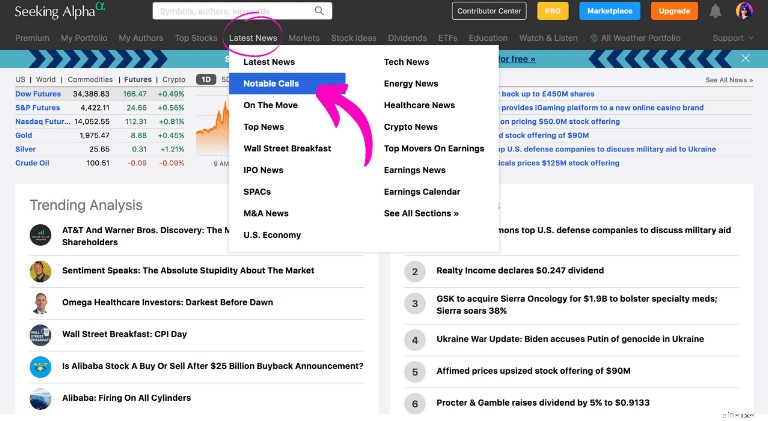
Une fois que vous êtes dans la section Appels notables, vous pouvez explorer différents sujets (tout allant de la fibre optique aux marques de vêtements comme Levi Strauss).
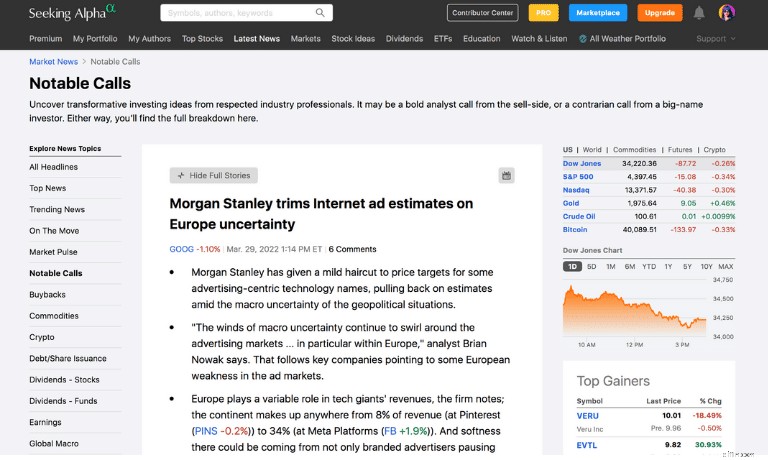
Les appels notables ne sont pas publiés quotidiennement – parfois, cela peut même prendre un mois pour que de nouvelles informations alimentent la section des appels notables.
Étant donné que les articles Notable Calls ne sont pas publiés de manière cohérente, assurez-vous de continuer à lire les articles des auteurs experts de Seeking Alpha pour recueillir davantage d'idées d'investissement.
Fonction n°4 du forfait Premium :évaluations des auteurs
Puisque Seeking Alpha est une plateforme de crowdsourcing, il n’est pas surprenant que chaque action soit également accompagnée d’une note d’auteur Seeking Alpha.
Par exemple, si vous jetez un œil à la page de résumé d'AT&T Inc., vous verrez les notes de l'action $T ventilées, par catégorie :
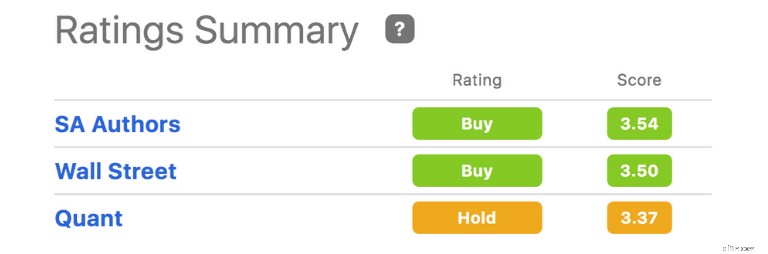
Pour en savoir plus sur les évaluations des auteurs de Seeking Alpha, cliquez sur le lien hypertexte bleu « SA Authors ».
Ici, vous verrez les notes d'auteur alpha recherchées pour une action comme :
- Très optimiste
- haussier
- Neutre
- Baissier
- Très baissier
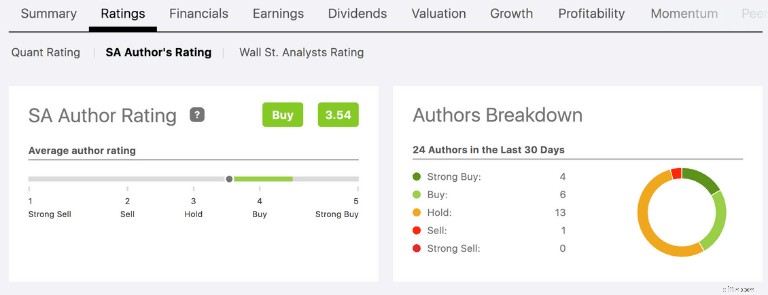
Entre autres facteurs, vous verrez la note des auteurs Seeking Alpha et la répartition des auteurs pour chaque note.
Dans le cas d'AT&T, 10 auteurs sur 24 ont recommandé d'acheter ou d'acheter fortement l'action (environ 42 %).
De plus, vous pouvez également consulter les antécédents des évaluations des auteurs au cours des dernières années :
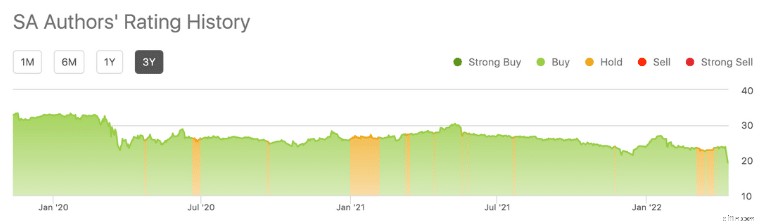
Sur la base de ce graphique, les auteurs de Seeking Alpha ont généralement recommandé d'« acheter » ou d'« acheter fortement » AT&T au cours des 3 dernières années.
Ce n’est que récemment que les auteurs ont suggéré de « conserver » au lieu d’acheter.
Enfin, vous pouvez également choisir d'afficher l'historique des notes par auteur :
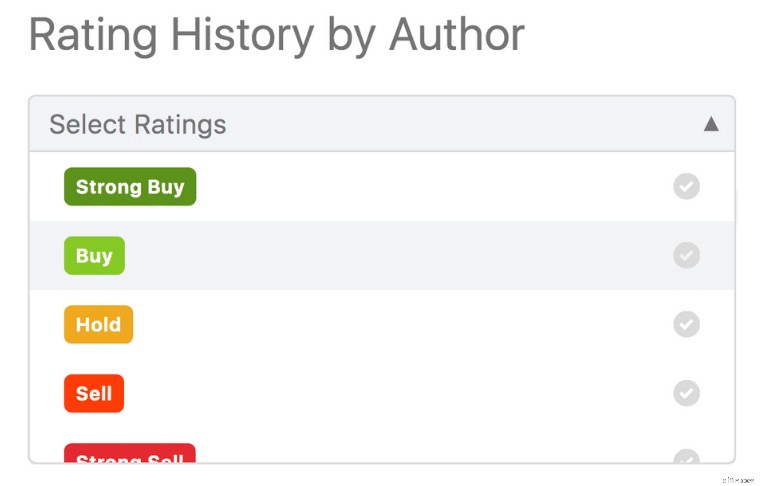
Donc, si vous êtes curieux de savoir quels auteurs ont évalué AT&T comme une suggestion « Acheter » ou « Vendre », par exemple, c'est l'endroit idéal pour le faire.
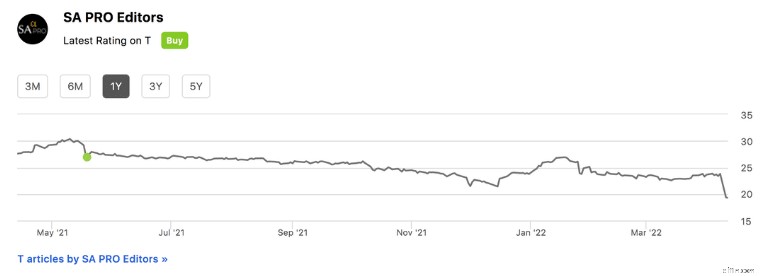
Ci-dessus, une capture d'écran d'un auteur qui a recommandé d'acheter des actions AT&T.
Si vous vous demandez pourquoi l'auteur a recommandé de le faire, vous pouvez cliquer sur le lien hypertexte bleu pour en savoir plus sur les articles AT&T de l'auteur.
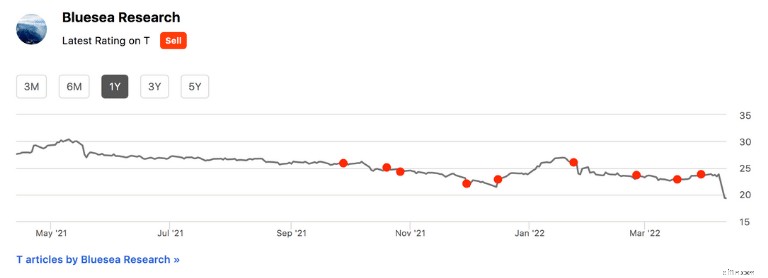
De même, si vous trouvez un auteur qui a suggéré de vendre l'action $T, vous pouvez savoir quand l'auteur a suggéré de le faire (voir les points rouges sur le graphique relatifs à la performance de l'action $T).
Encore une fois, vous pouvez lire les articles de cet auteur sur AT&T en cliquant sur le lien hypertexte bleu situé sous le tableau de vente de l'auteur.
Fonction n° 5 du forfait Premium : grades de dividendes
Si vous êtes un investisseur en dividendes , c'est l'une des fonctionnalités les plus intéressantes que vous trouverez :l'outil de notation des dividendes.
En bref, l'outil Dividend Grade est conçu pour aider les investisseurs à déterminer si un dividende est sûr et si le revenu de dividende sera stable, augmentera ou éventuellement diminuer.
Il existe 4 niveaux de dividendes différents, expliqués ci-dessous :
Sécurité des dividendes
Mesure la rentabilité et la stabilité d'un dividende
Croissance des dividendes
Mesure le potentiel de croissance d'un dividende en utilisant les taux de croissance historiques et estimés (inclut les revenus, les flux de trésorerie, les bénéfices, etc.)
Rendement des dividendes
Mesure le rendement historique d'un dividende et compare le rendement à celui d'autres actions du même secteur pour déterminer le rendement futur du dividende.
Cohérence des dividendes
Mesure la cohérence des versements et des augmentations de dividendes d'une entreprise.
L'une des raisons pour lesquelles les investisseurs, en particulier les investisseurs passifs, aiment tant les dividendes est que les dividendes sont une forme de revenu passif. .
Et plus vous achetez d’actions versant des dividendes, au fil du temps, vous pouvez vraiment commencer à gagner de l’argent simplement grâce aux actions versant des dividendes.
Jetez un œil aux niveaux de dividendes actuels d'AT&T (en avril 2022) :
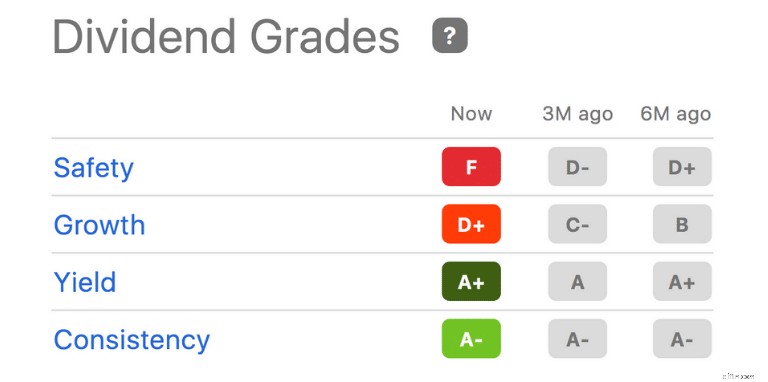
Ce que j'aime dans les notes de dividendes, c'est que vous pouvez voir les notes actuelles par rapport à celles d'il y a 3 mois et même 6 mois.
De toute évidence, la sécurité des dividendes d’AT&T est menacée. Cela signifie qu'AT&T pourrait diminuer, voire supprimer son dividende.
Et c'est vrai :jetez un œil à la bannière d'avertissement rouge lorsque je tape $T dans la barre de recherche :
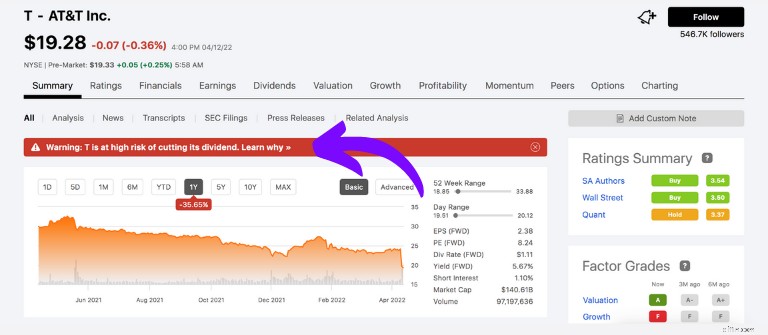
Sans même regarder les niveaux de dividendes, je suis immédiatement informé qu'AT&T pourrait réduire ses dividendes.
Si vous souhaitez en savoir plus, cliquez simplement sur la bannière :
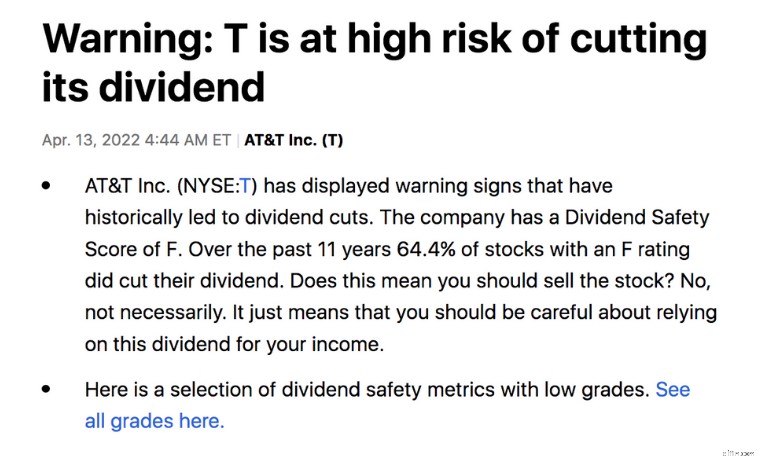
Vous serez redirigé vers un article contenant une analyse plus approfondie des raisons pour lesquelles AT&T pourrait réduire ses dividendes dans un avenir proche.
Maintenant, si vous souhaitez approfondir les détails des différents niveaux de dividendes, cliquez simplement sur le lien hypertexte bleu de chaque niveau de dividende :
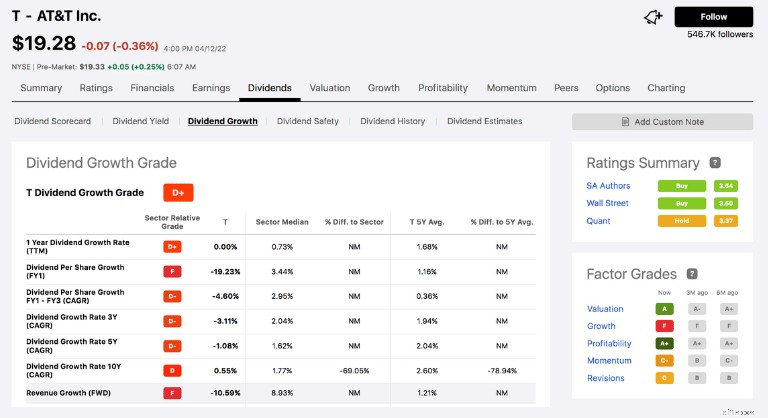
Par exemple, dans la capture d'écran ci-dessus, vous verrez un extrait de la profondeur que vous obtenez simplement en lisant sur la note de croissance des dividendes.
Je préfère consulter l'onglet Historique des dividendes, qui ressemble à ceci :
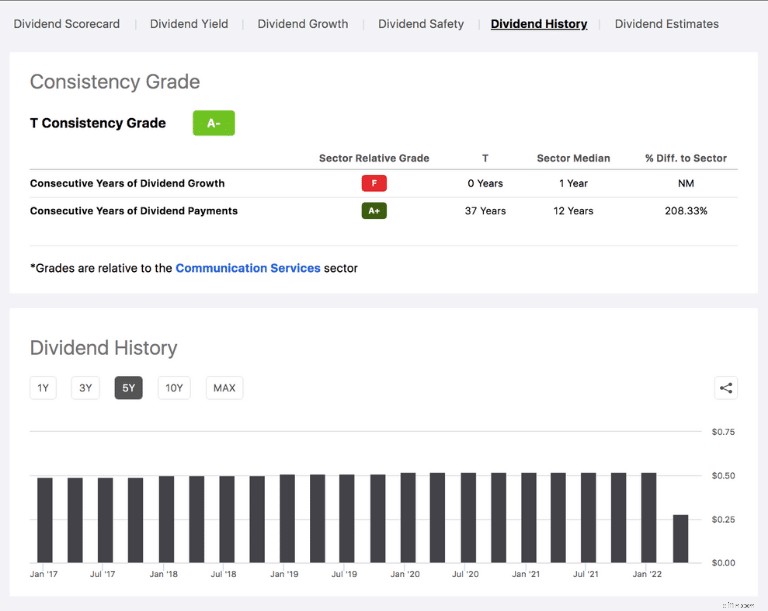
Comme vous pouvez le constater, au cours des 5 dernières années, AT&T a eu un historique de dividendes très cohérent, mais au 12 avril 2022, les dividendes ont chuté de 0,52 $ à 0,28 $.
Il s'agit d'une réduction très drastique qui signale généralement une inquiétude pour les investisseurs.
Enfin, si vous souhaitez en savoir plus sur les futures estimations de dividendes (qui ne font pas partie des 4 niveaux de dividendes originaux), vous pouvez cliquer sur l'onglet correspondant :
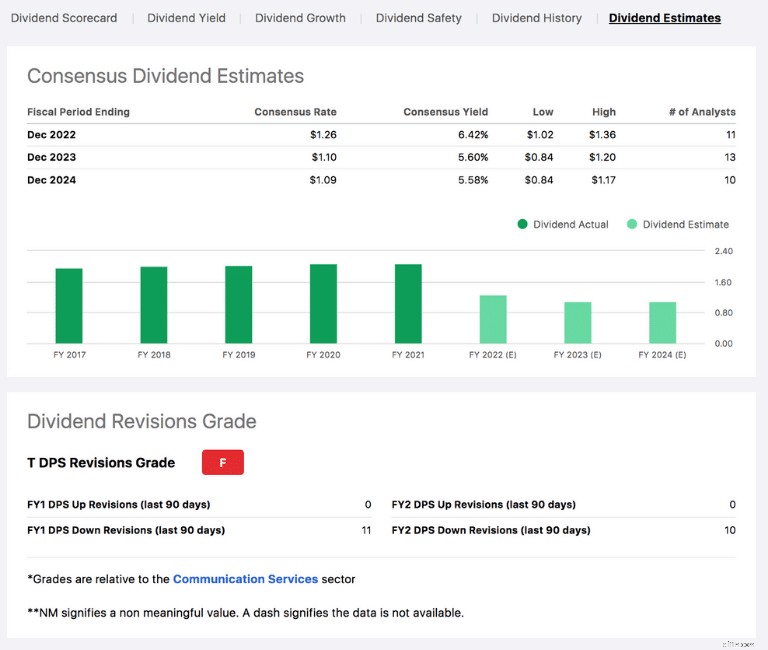
Comme vous pouvez le constater, les estimations de croissance des dividendes ne prédisent pas que le rendement des dividendes rebondira aux niveaux initiaux d'AT&T, du moins pas au cours des prochaines années.
Fonction n°6 du forfait Premium :tableau de bord d'actualités
Si vous souhaitez simplement en savoir plus sur les actualités boursières les plus importantes et les plus urgentes sans entrer dans le vif du sujet, utilisez le tableau de bord des actualités.
Vous pouvez accéder au tableau de bord des actualités en cliquant sur l'onglet « Dernières actualités ».
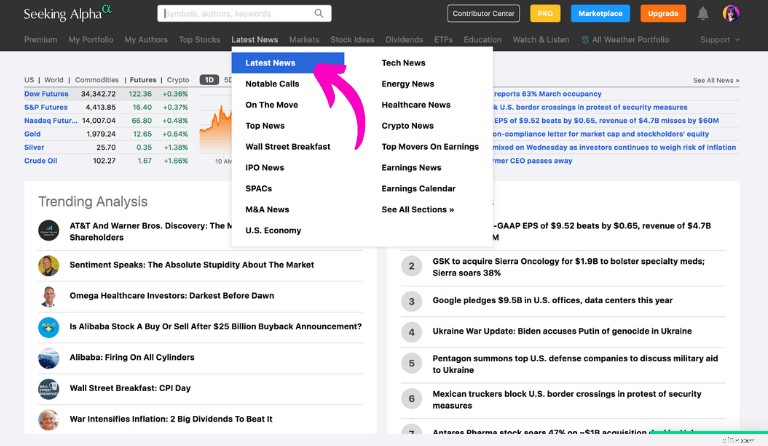
Une fois que vous avez cliqué sur les onglets « Dernières nouvelles », vous serez redirigé vers une page intitulée « Actualités du marché ».
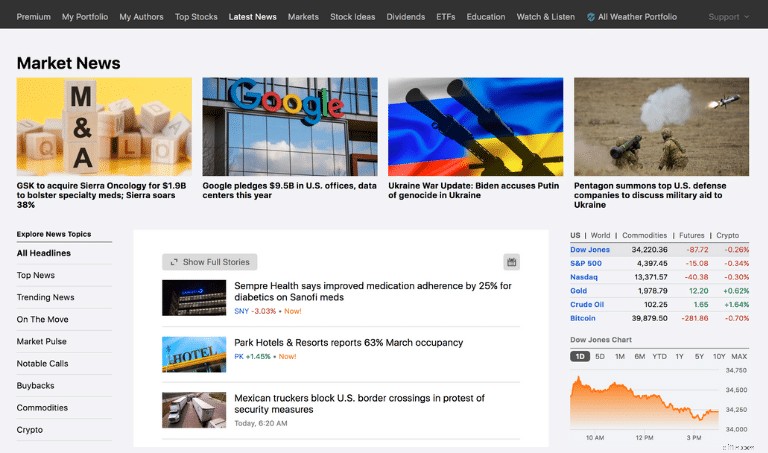
Depuis ce tableau de bord, vous pouvez utiliser le filtre (à gauche) pour explorer les sujets qui vous intéressent.
Vous pouvez même définir une plage de dates pour concentrer vos lectures sur une certaine période.
Fonctionnalité n° 7 du forfait Premium :Tableau de bord des facteurs
Semblable aux notes de dividendes, vous pouvez également voir ce que Seeking Alpha appelle une carte de pointage factorielle.
En d’autres termes, le tableau de bord est un outil qui vous aide à prendre des décisions rapides quant à l’opportunité d’envisager une action ou de l’exclure, en fonction de vos critères d’investissement.
Le Factor Scorecard utilise 5 facteurs, notamment :
- Valeur
- Croissance
- Rentabilité
- Élan
- Révisions du BPA (bénéfice par action)
Jetons un coup d'œil au Factor Scorecard pour $GME, mieux connu sous le nom de Gamestop.
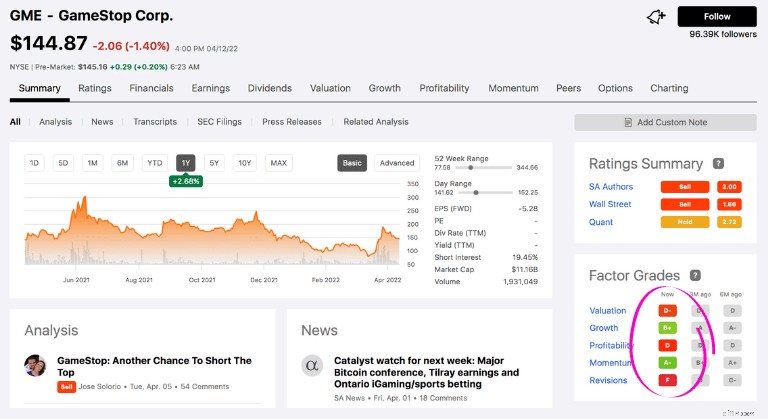
La case Factor Grades est décomposée en 5 catégories que j’ai mentionnées plus tôt.
La note de chaque catégorie est également comparée à sa note précédente il y a 3 et 6 mois :
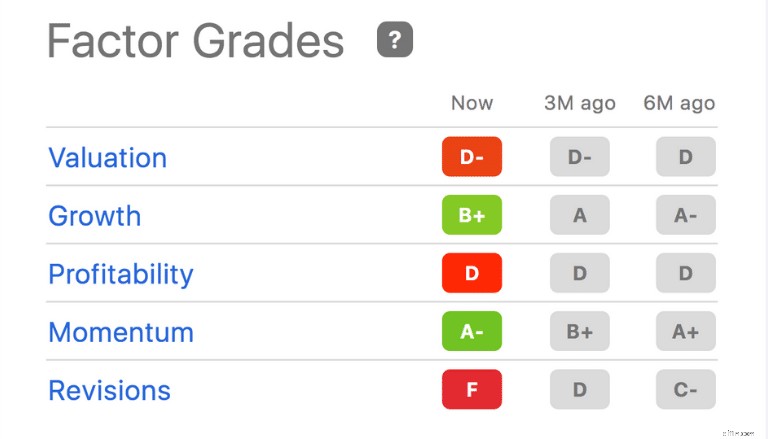
De toute évidence, les notes factorielles de Gamestop sont assez médiocres. Cela signifie que Gamestop n'est probablement pas le meilleur investissement – à moins que vous ne soyez à l'aise de prendre un risque avec une action plutôt volatile.
Si vous souhaitez approfondir les détails des différentes notes factorielles, cliquez simplement sur le lien hypertexte bleu de chaque note.
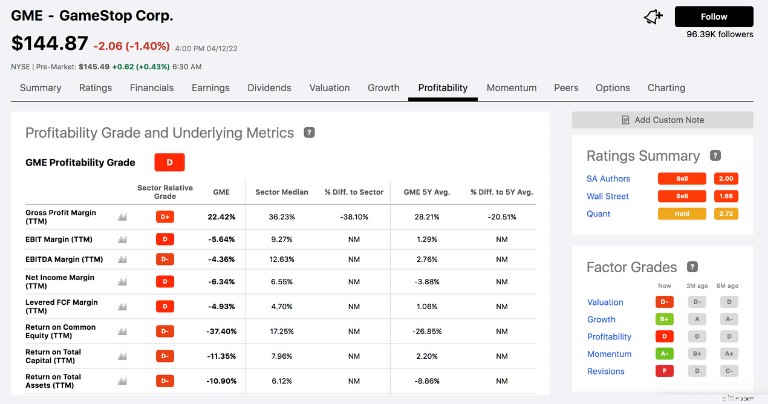
Par exemple, dans la capture d'écran ci-dessus, vous verrez un extrait de la profondeur que vous obtenez simplement en lisant sur la rentabilité de Gamestop.
J'aime aussi consulter l'onglet Momentum pour vérifier les performances passées et les performances de $GME par rapport à d'autres indices de référence, comme le S&P 500, par exemple.
Voici un aperçu des performances passées de Gamestop par rapport aux autres entreprises du secteur :
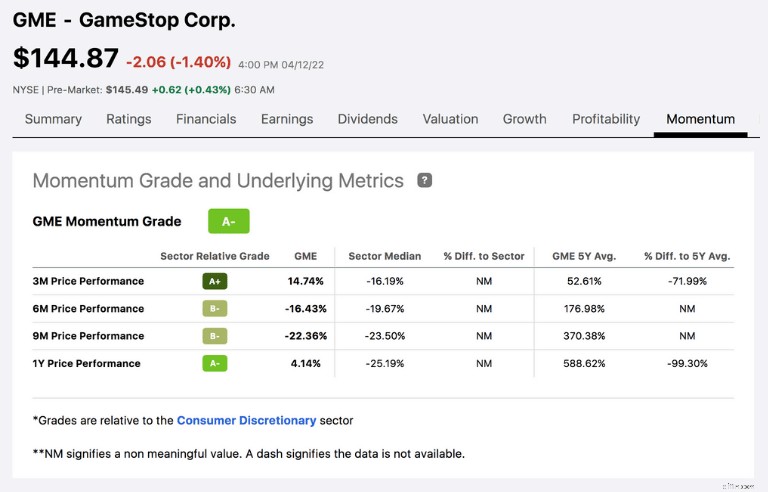
Vous pouvez également consulter la performance des prix de Gamestop par rapport à certaines références.
Dans la capture d'écran ci-dessous, le S&P 500 est utilisé comme référence :
Ce graphique de rendement des prix raconte l'histoire complète :
Vous pouvez voir à quel point Gamestop a constamment sous-performé par rapport au S&P 500 jusqu'au début de la saga Gamestop début 2021.
Since early 2021, the Gamestop prices have relatively outperformed the S&P 500 – but is it really a solid investment?
That’s where Seeking Alpha’s tools like the Factor Scorecard can really come into play and help guide you to an answer.
Premium Plan Feature #8:Peer Comparisons
Let’s say you’re thinking about buying Tesla, but you’re not 100% convinced that it’s the right addition to your portfolio.
That’s where the Peer Comparisons come in.
The Peer Comparison tool is customizable, so you can change the stock types that you’re comparing.
Here’s an example:First, search your desired stock (in this case, Tesla):
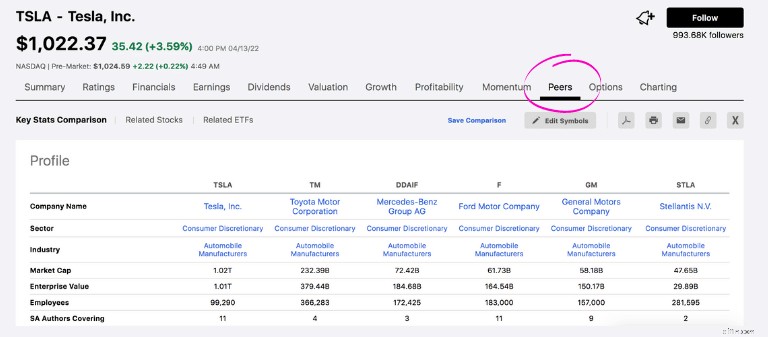
Make sure you click on the “Peers” tab.
Once you’re on the “Peers” tab, you can see that Seeking Alpha already defaults to several peer stocks with which you can compare Tesla.
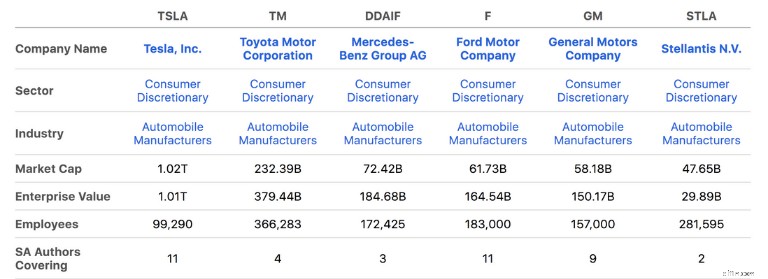
However, if you want to customize the peer comparisons or even reduce the number of peers you’re comparing to, then just click on the “Edit Symbols” button.
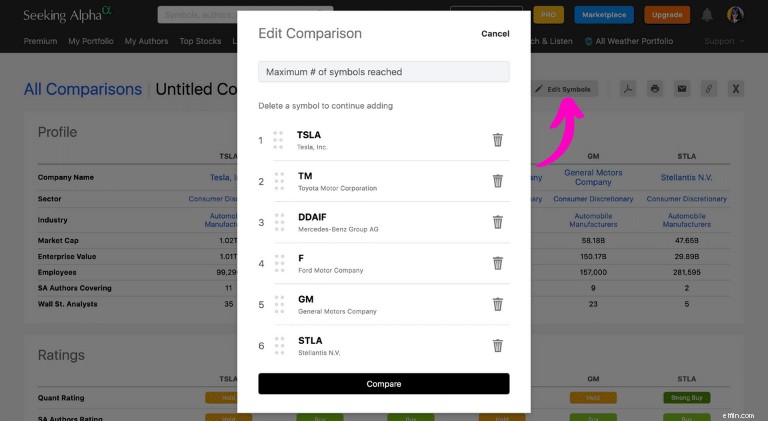
This is where you can customize all peer comparisons.
Premium Plan Feature #9:Alert Customization
If you really like a stock and want to receive alerts whenever news about that stock is released, you can customize your own email alerts.
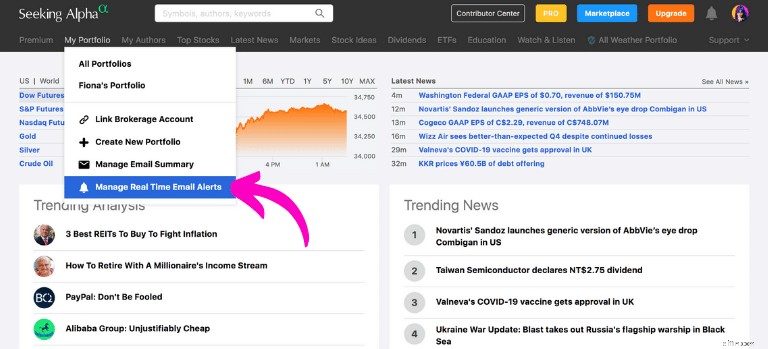
You do this by hovering over the “My Portfolio” tab and then clicking on “Manage Real Time Email Alerts.”
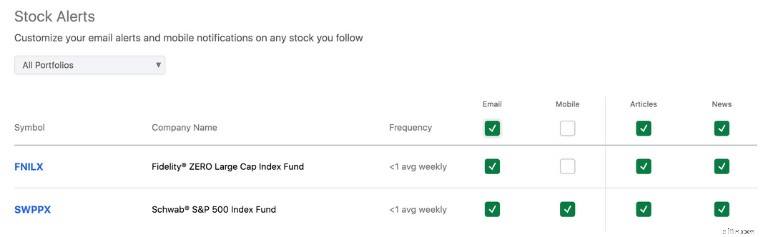
You’ll see a snapshot of your favorite stocks, which you can then select to follow.
The next thing you need to do, is:
- Select the type of alert (article vs. news)
- Select your alert method (email vs. mobile push notification)
I’m a big fan of this alert customization option.
Premium Plan Feature #10:Quantitative Ratings
One of the key features when evaluating a stock on Seeking Alpha should be the Quant Ratings section.
Quant Ratings are based on a computer algorithm with the goal to find the best stocks.
As with the previous Ratings (Wall Street and SA Authors), the Quant Ratings compare the stock to other stocks in the same industry.
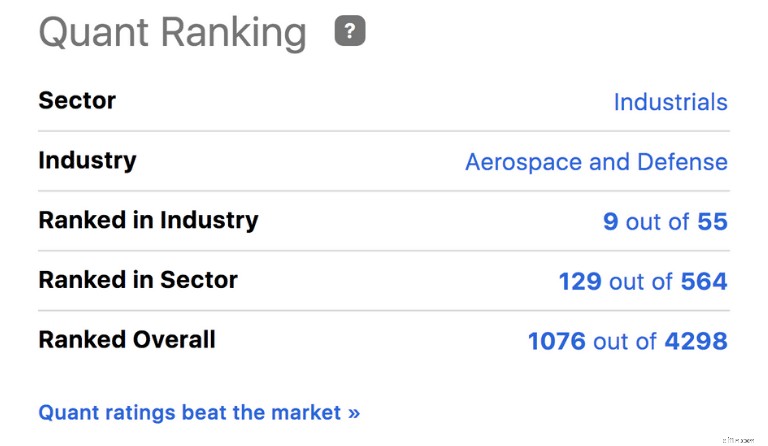
The Quant Rankings use historical information to determine the numbers, as shown in the above screenshot (this case, for Lockheed Martin).
If the Quant Rankings deem a stock to be a top pick, then that stock would be marked as “Strong Buy.”
In Lockheed Martin’s case, the Quant Rankings determined the stock to be a “Hold” for now.
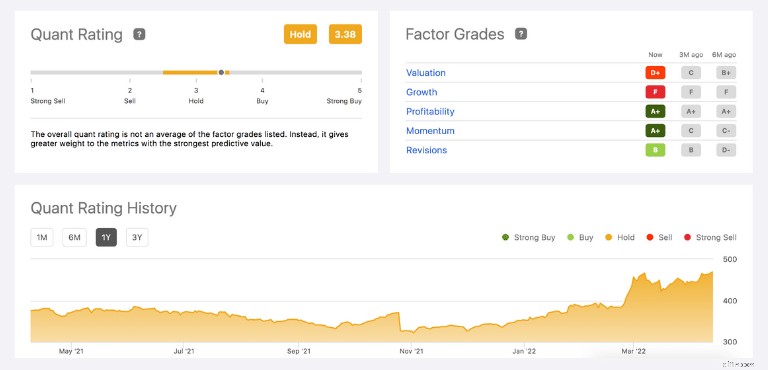
The Quant Ratings and the Factor Grades are both designed and managed by Steve Cress , who has had extensive experience in investment research, hedge funds, and the likes.
The Quant Ratings is what you are looking for – that’s because they can help boost your portfolio performance.
In fact, Seeking Alpha claims that stocks rated as a 4.5 or higher have beat the S&P 500 4x.
On the other hand, stocks rated as 1.5 or lower underperformed the S&P 500, returning roughly 33% of the S&P 500.
Clearly, the Quant Ratings are very helpful.
Premium Plan Feature #11:Stock Screening Tools
As you can see, Quant Ratings are a very powerful tool when evaluating the strength of a stock.
But what if you want to view the top-rated stock, using the Quant tools?
Enter the Stock Screener.
You’ll find the Stock Screener by clicking on the “Top Stocks” tab and then clicking on “Top Rated Stocks.”
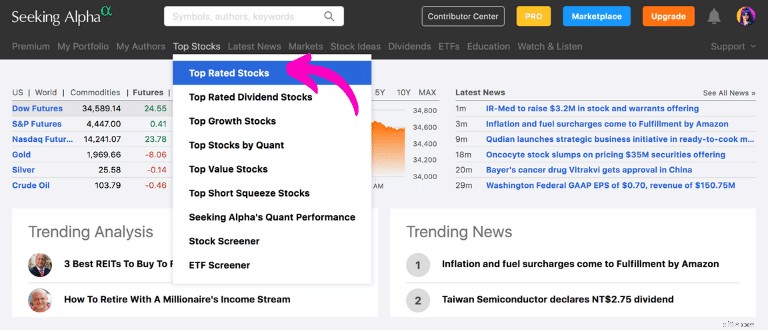
From there, you’ll see a summary of the top rated stocks, and typically the highest Quant Rating is 4.99:
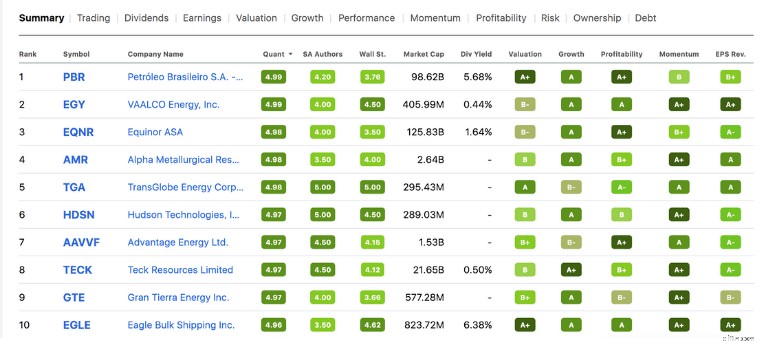
Remember what was said in the previous Quant Ratings section:
Stocks given a Quant Rating of 4.5 or higher have typically outperformed the S&P 500 by up to 4x!
And it’s true that across the board PBR, also known as Petrobas, (in this case the top Quant rated stock) is considered a “Buy” to “Strong Buy” across the board:
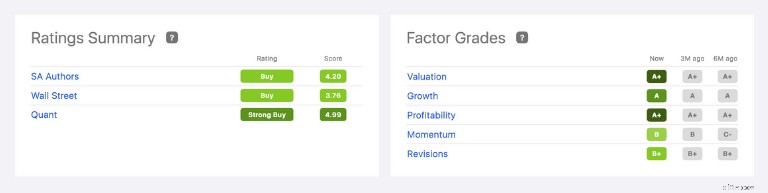
This stock screener is a feature that is currently available to Premium users.
Another neat trick with the Stock Screener?
You can customize your own stocks by using up to 100 different filters!
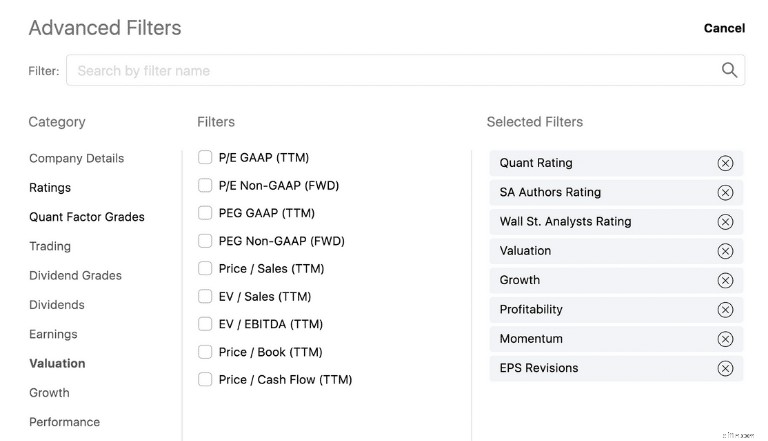
Above is just an example of the many different filter applications you can use to customize your stock screener.
Based on historical performance, stocks ranked as 1.5 or lower drastically underperformed the S&P 500.
Premium Plan Feature #12:Wall Street Consensus
If you want to follow what sell-side analysts have to say in terms of buying, holding, or selling a stock, then check out the Wall Street Ratings.
Instead, Seeking Alpha collects data from the Wall Street analysts to determine whether a stock is rated as:
- Very Bullish
- Bullish
- Neutral
- Bearish
- Very Bearish
The reason why Wall Street Ratings can be helpful for people like you and me is that these rankings should (in theory) be objective and neutral.
To review the Wall Street Ratings of a certain company, just type in the company name or ticker symbol in the “Search” bar on the top, and then look at the information on the right of the screen.
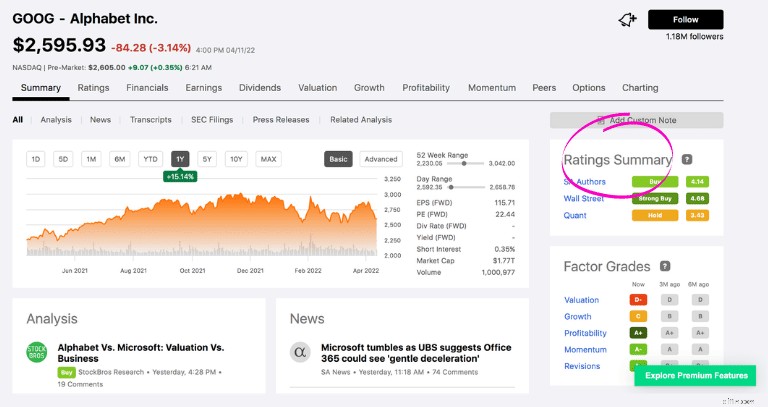
When you look at the right-hand side, you’ll see the “Ratings Summary” outline, with 3 titles:
- SA Authors
- Wall Street
- Quant
To learn more about the Wall Street rating, click on the “Wall Street” blue hyperlink.
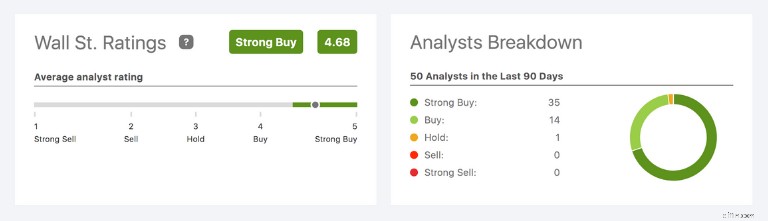
Among other factors, you’ll see the Wall Street average analyst rating and the Analyst Breakdown for each rating.
In Google’s case, 49 out of 50 Wall Street analysts recommended to Buy or Strongly Buy the stock (that’s 98% of analysts!).
Furthermore, you can also review the Wall Street Ratings’ track record for the past few years:
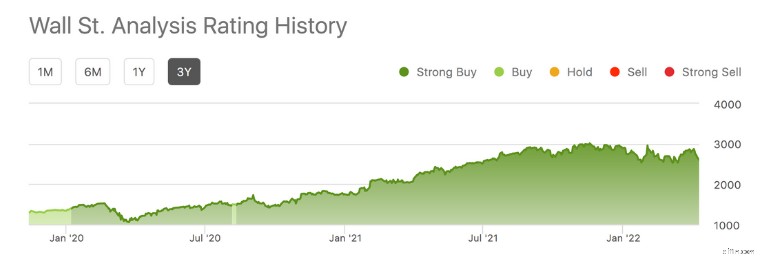
Based on this graph, Wall Street analysts have recommended to Buy or Strongly Buy Google over the past 3 years.
Lastly, you can also see how the Wall Street analysts’ opinions have changed over time with the Recommendations Chart (found at the bottom of the page):
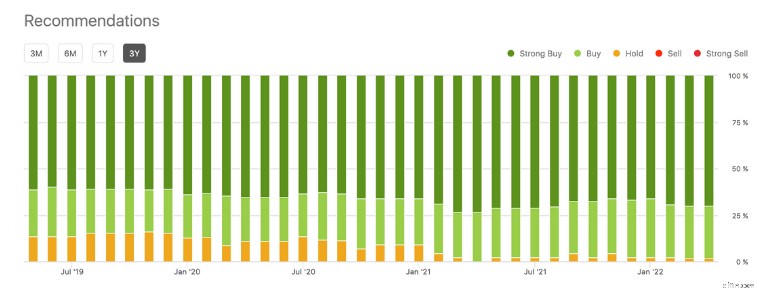
It appears that in 2019 and early 2020 more analysts recommended to hold Google, while starting in 2021, virtually all analysts recommended to buy Google.
Premium Plan Feature #13:Data Visualization Charts
Since I’m a very visual person, one of my favorite features on Seeking Alpha is the data visualization of the charts.
In fact, Seeking Alpha has a specific tab named “Charting” that you can access to view the data in an aesthetically pleasing manner:

Once you click on the “Charting” tab, you can even customize the data you want to view.
For example, you can compare one stock’s performance (in the case, Gamestop) to another stock or benchmark like the S&P 500:
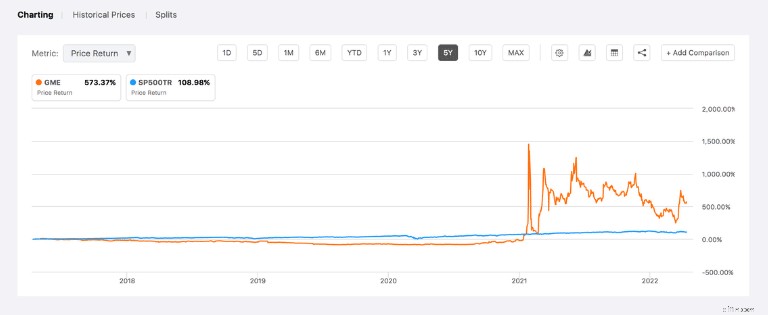
In this custom comparison, you can see that the S&P 500 has typically outperformed Gamestop until early 2021.
If you want to add additional stocks or funds to compare, you can do so, as well:
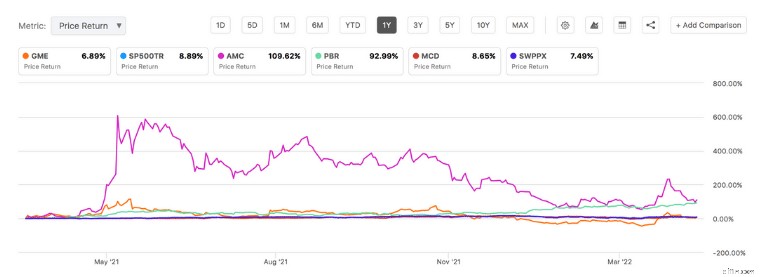
Another neat way to customize your data is changing the format of the data presentation – you can select:
- Area
- Columns
- Line graph

If you’re happy with the data visualization chart you created, you can also copy to clipboard, download, or copy the link to your chart for future reference.
Premium Plan Feature #14:Earnings Calls
If you’re a Seeking Alpha member, you have exclusive access to earnings calls transcripts.
In most cases, you can expect to have an earnings call at the end of the first 3 quarters.
At the end of the 4th quarter, you’ll receive both an annual report as well as a quarterly report.
If you’re busy at the time of the actual earnings call, you can always count on Seeking Alpha to have a transcript available – both audio and written versions.
You can access the earnings reports of any publicly-traded company by hovering over “Latest News” and then clicking on the “Earnings News” button.
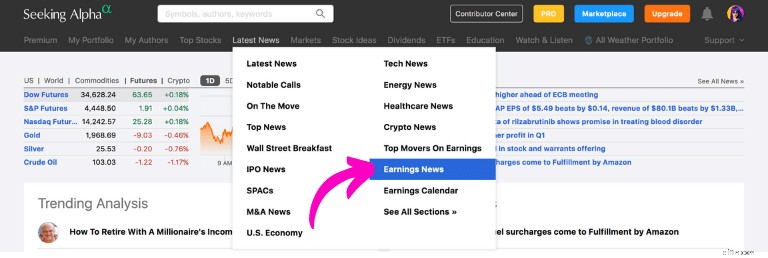
You can also access a schedule of the upcoming earnings calls by clicking on the “Earnings Calendar.”
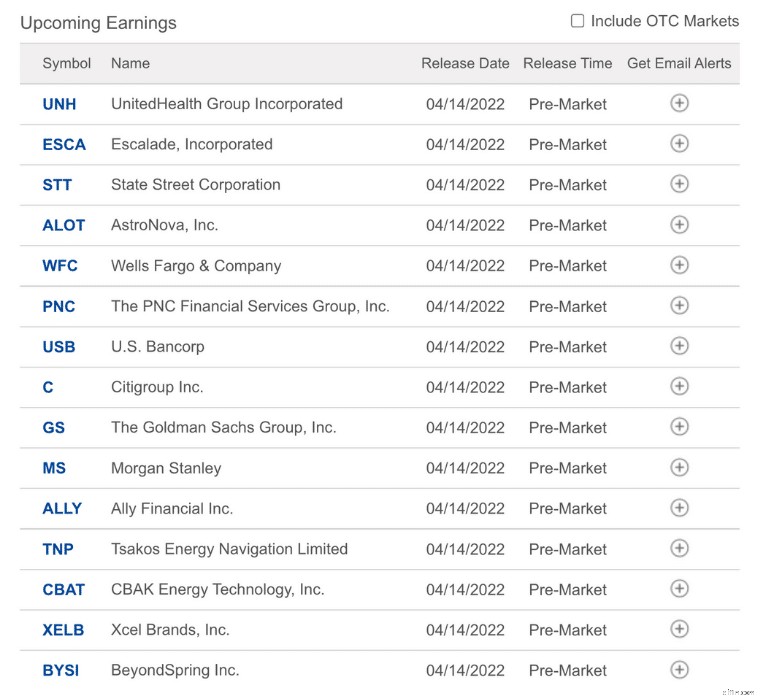
Once in the Upcoming Earnings tab, you can select which company you want to listen to and you can even sign-up for custom email alerts by clicking on the “+” sign.
If you’re looking up one of your favorite companies, let’s call it Amazon, then you just have to click on the “Earnings” tab for that stock:

From there, you can click on the “Transcripts” tab and look at all previous transcripts:
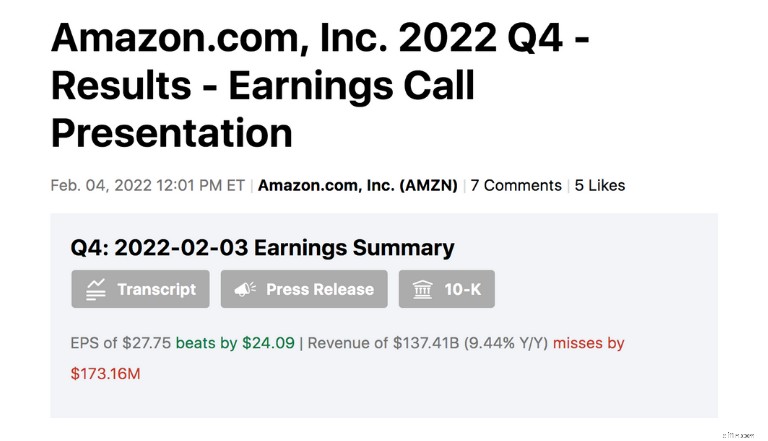
Depending on the company you review, you can also access a PDF file with slides that highlight the company’s key points.
Premium Plan Feature #15:Unlimited Access to Articles
With the Premium (and of course Pro) memberships, you also have unlimited access to exclusive articles written by industry professionals.
Since there is so much information, you can filter out the articles in several different ways.
First, you can simply access your home page and review the “Trending Analysis” of the day or the “Trending News” of the day.
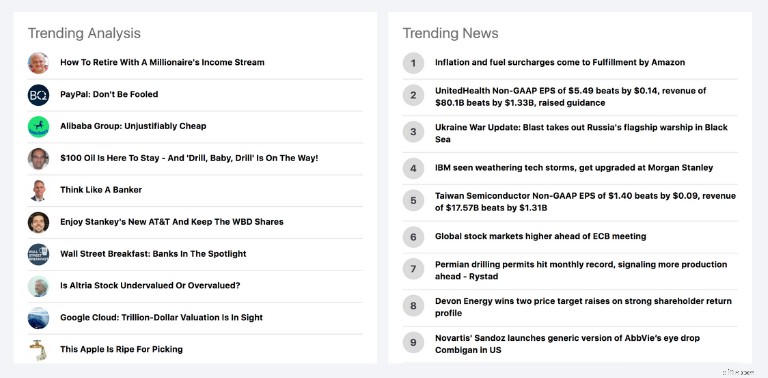
If you want to review articles written by various authors about just 1 particular stock or fund, then just type in the stock name or ticker symbol into the Search Bar.
From there, click on “Summary” and then on “Analysis” so you can see the various articles offered by authors on that stock.
Here’s an example of articles written about the Tesla stock:
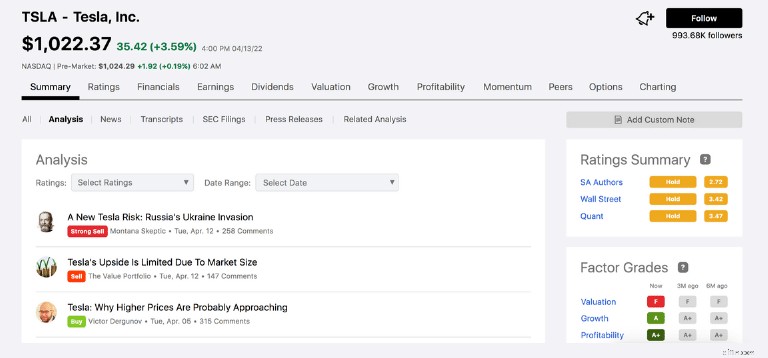
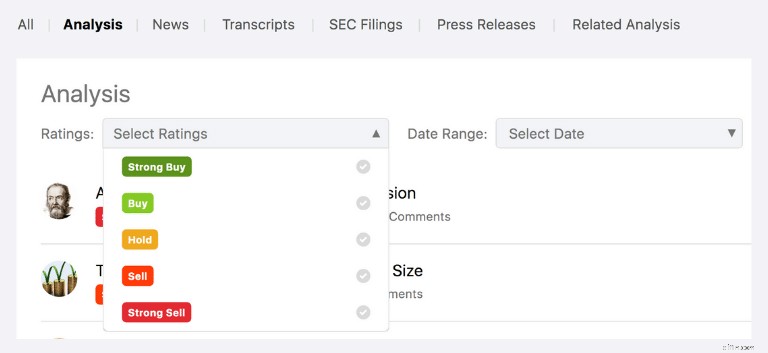
If you want to read articles from authors who advocate buying, selling, or holding, you can customize your ratings by clicking on the “Select Ratings” drop down box.
While most articles do focus on US-based public companies, there are some articles that also focus on alternative investments as well as international companies.
Premium Plan Feature #16:Create Your Own Mock Portfolio
As a Premium Seeking Alpha user, I’m a very big fan of creating your own portfolio in Seeking Alpha.
If you’re dedicated to kickstarting your kids’ financial future, then you may also want to check out the Greenlight Debit Card , which can do wonders.
You can set up your own mock portfolio in Seeking Alpha by hovering over “My Portfolio” and then clicking on “All Portfolios.”
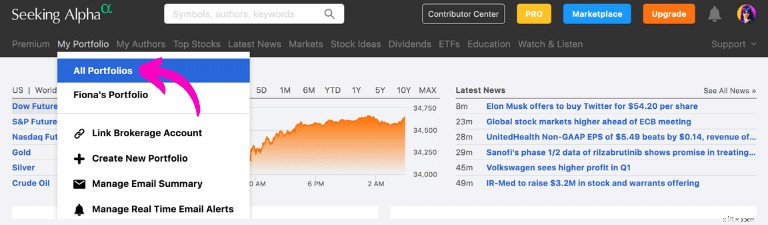
From there, you can click the button titled “+ New Portfolio.”

This will allow you to add a new, mock portfolio while using the Seeking Alpha platform.
You can give that portfolio a title and then you can either link your outside brokerage account to this portfolio or add your own stocks to the portfolio.
For the purpose of this section, we’re going to click on “Create Portfolio.”
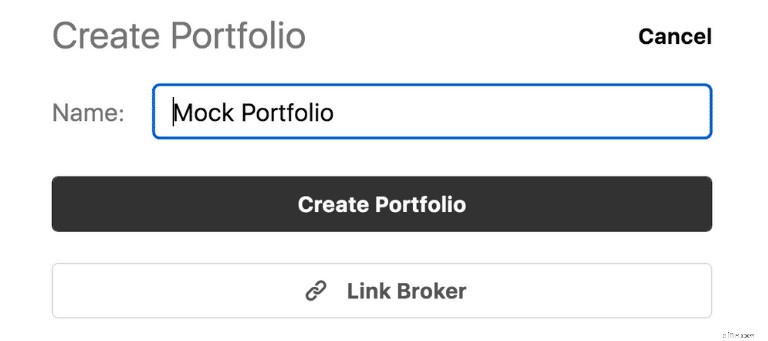
Once you’ve created your portfolio, you can start adding ticker symbols to complete your portfolio.
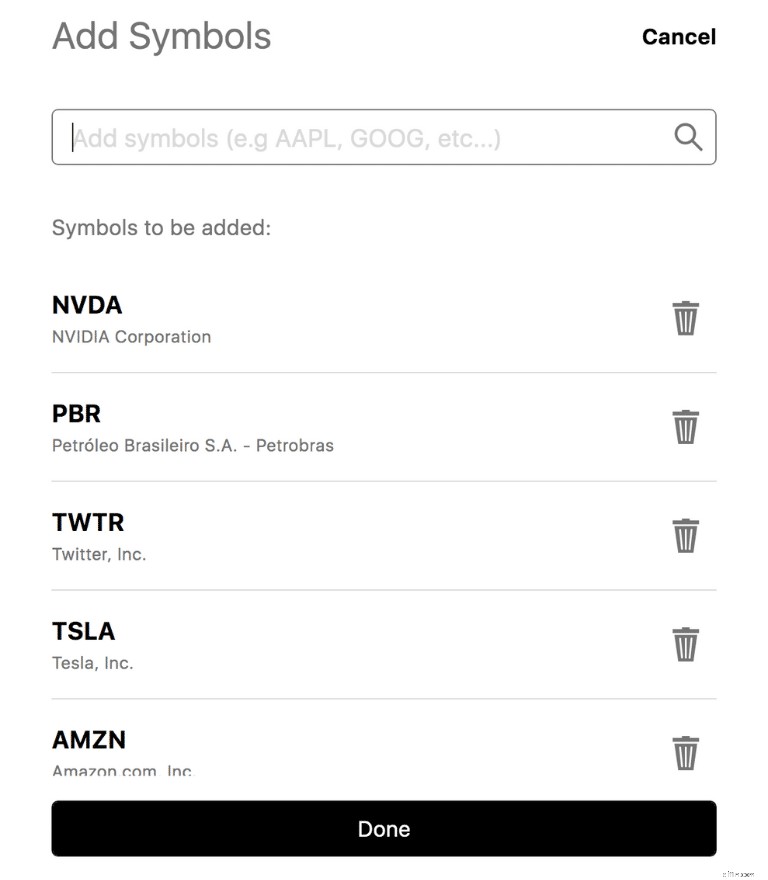
Once you’re happy with your portfolio construction, you can click “Done.”
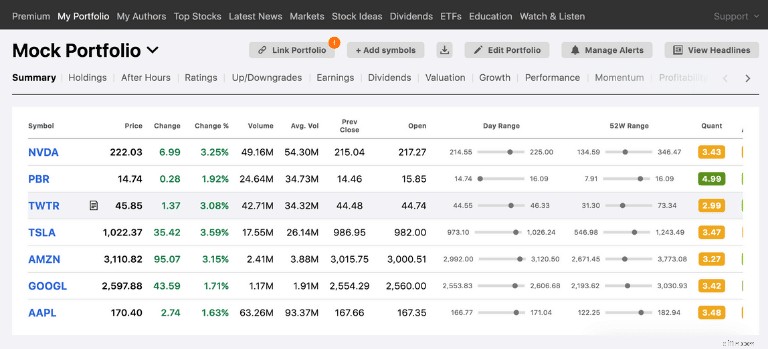
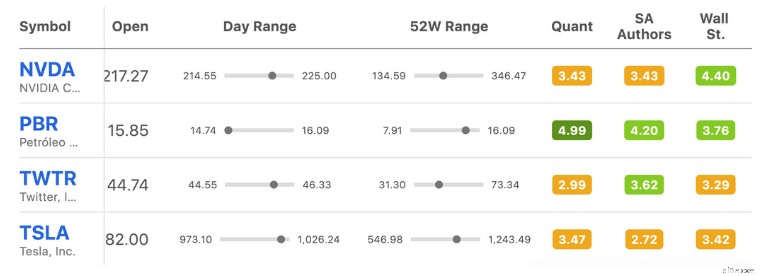
Seeking Alpha does a fantastic job breaking down each stock in your mock portfolio by using multiple different factors.
You can even compare the Quant, SA Authors, and Wall Street ratings to each other:
If you click on the “View Headlines” button in your portfolio, you’ll see an assortment of articles written just for your specific stocks in your portfolio:
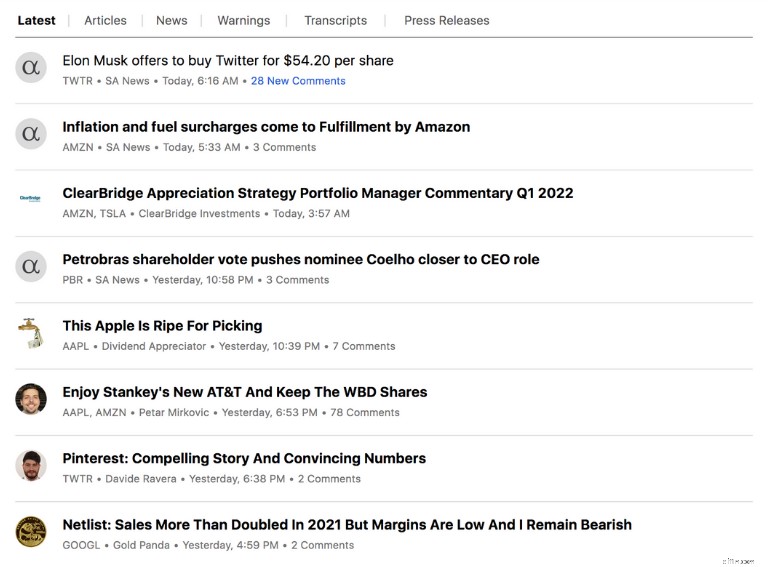
Finally, one of the other notable features of your Mock Portfolio is the custom alert and notification button.
When you click on “Manage Alerts” you can customize your alerts based on:
- Content
- Delivery
- Price alerts
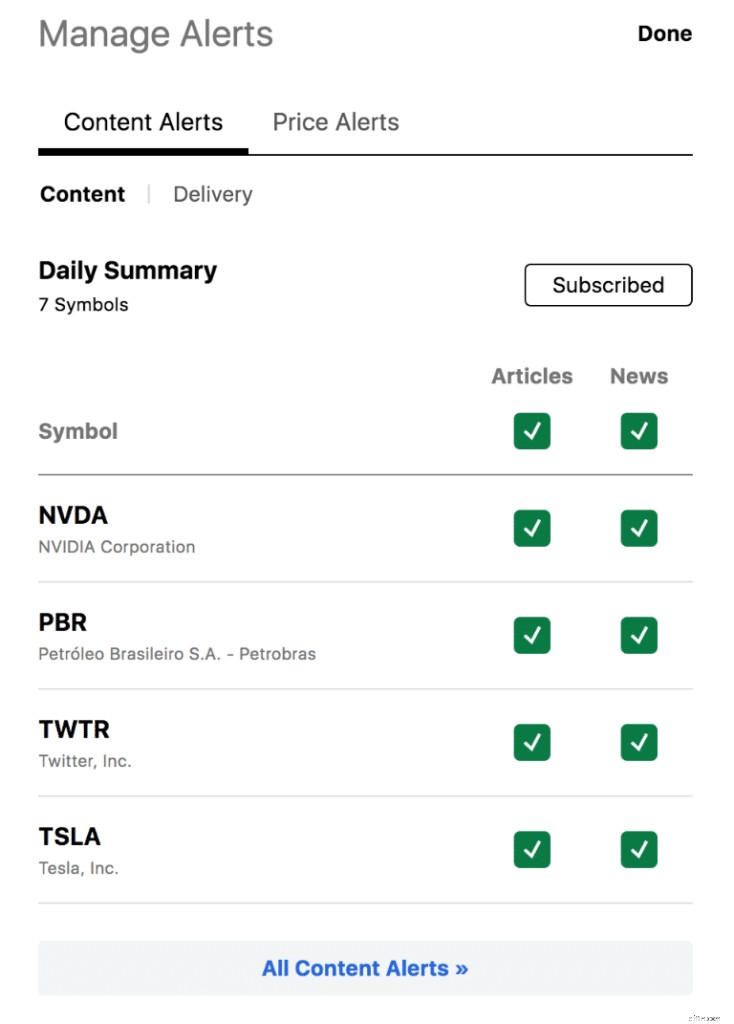
So, if there is an update on a stock like Twitter for example, you’ll receive real-life notifications to your email or phone – depending on the delivery method that you select.
You can also manage your price alerts, which I will review in a separate section here.
Premium Plan Feature #17:Manage Your Custom Price Alerts
If you’ve already created your mock portfolio through Seeking Alpha (or even if you’ve already connected your outside brokerage account with Seeking Alpha), you can set custom price alerts.
For example, if you own shares of Twitter and the current price Quant Rating is 2.99, which is nearing a sell territory, then you may want to filter for other stocks that might be deemed a “Strong Buy.”
Here’s how (this is assuming you’ve already set up your own portfolio in Seeking Alpha. If not, then please reference the previous feature):
First, access your portfolio and click on “Manage Alerts.”
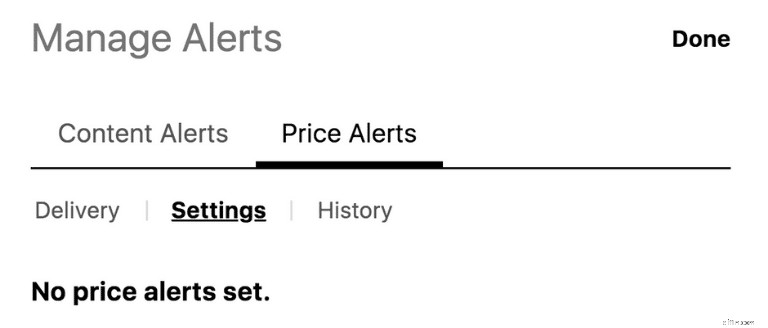
Then, click on “Price Alerts” and then on “Settings.”
From there, you’ll want to click on “All Price Alerts,” which you’ll find at the bottom of the dialogue box.
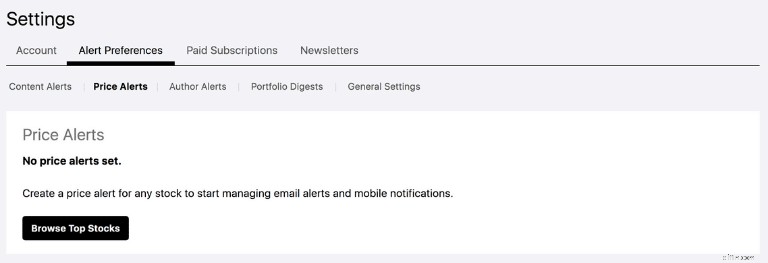
From there, click on the “Browse Top Stocks” button.
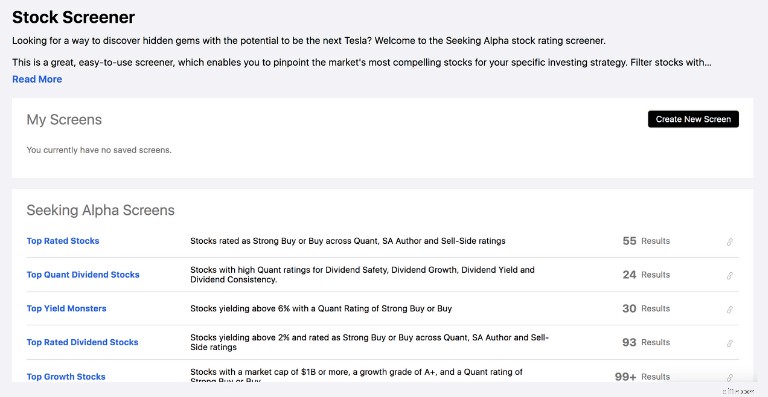
You can either continue using the Seeking Alpha Screens (and there are many) or you can create your own, custom screen.
If you create your own custom screen, you’ll be brought to a window like the one below:
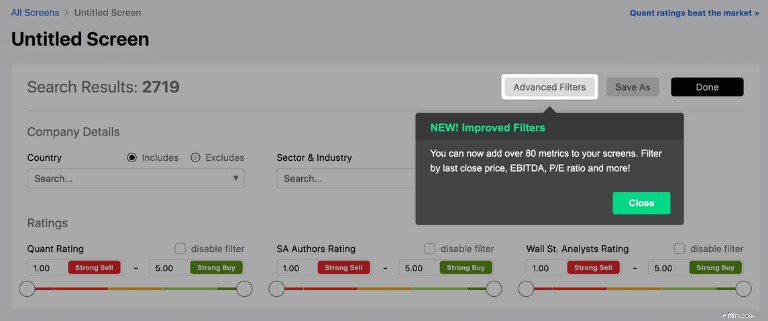
You can customize your stock screener by adding up to 80 different filters.
For example, if you want to screen for all stocks that are assigned a 4.00 out of 5.00 rating for the Quant, SA Authors, and Wall St. Analysts, this is the place to do so.
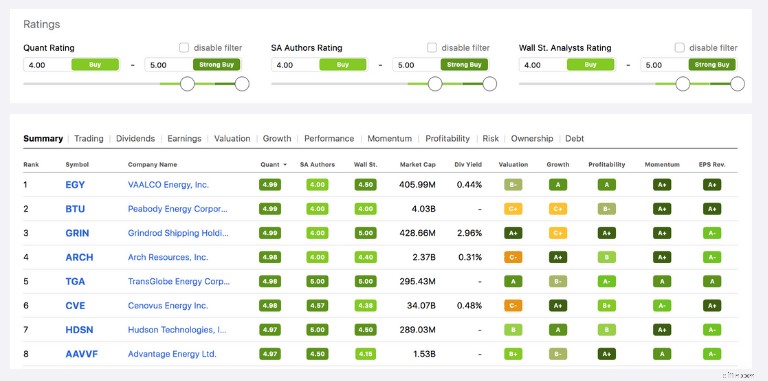
Take some time to experiment with the screening tool, because there is just so much information.
However, if you’re ever wondering why or how to filter for the best stocks for your portfolio (or your child’s portfolio), this is probably the tool you’ll want to use.
Premium Plan Feature #18:Downloadable Financial Statements
If you’re an investor who really enjoys digging deep into the financials for each company before trading its stock, you’ll be happy to know that the Premium tier also comes with downloadable financial statements .
In fact, you can access up to 10 years worth of financial statements to download, review, and analyze.
Just search your favorite company and click on the “Financials” tab.
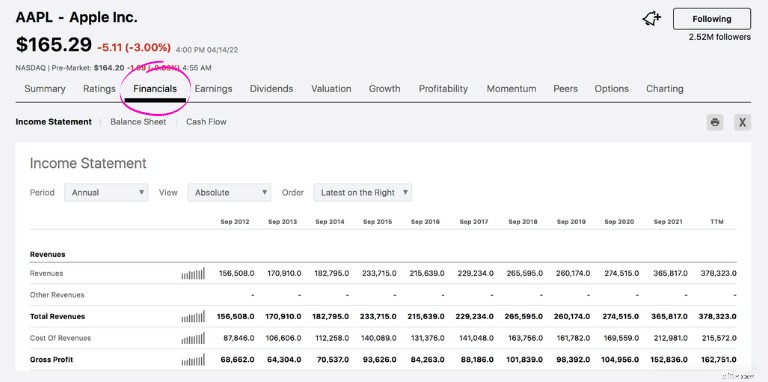
From there, you can either review the numbers or for a more visual approach, just hover over the line graph for each data set:
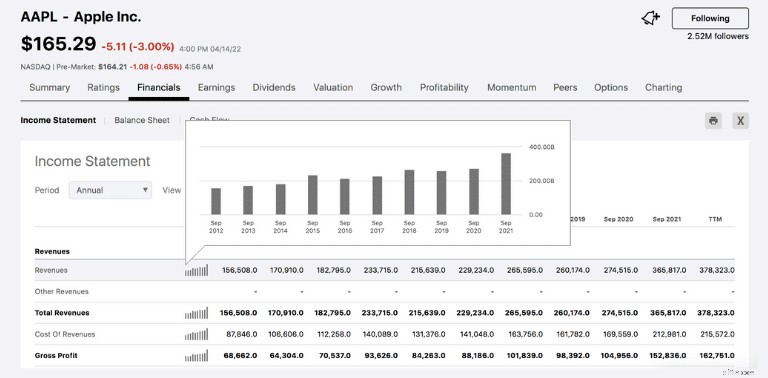
If you want to review the numbers in even more depth, you can click on the print icon or the “X” icon at the top, right of your screen to either print to PDF or download via Excel.
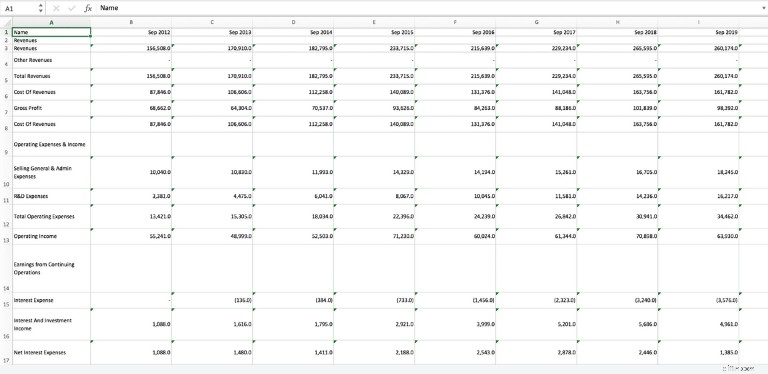
So depending on how in-depth you want to go, Seeking Alpha really gives you a lot of options to analyze your stocks.
Premium Plan Feature #19:Stock Performance Comparison Tool
Ever wonder how your current stocks compare to other stocks in the marketplace?
Take a look at the Stock Performance Comparison Tool – which is one of my favorite tools.
Just search your favorite stock and then click on the “Charting” tab.
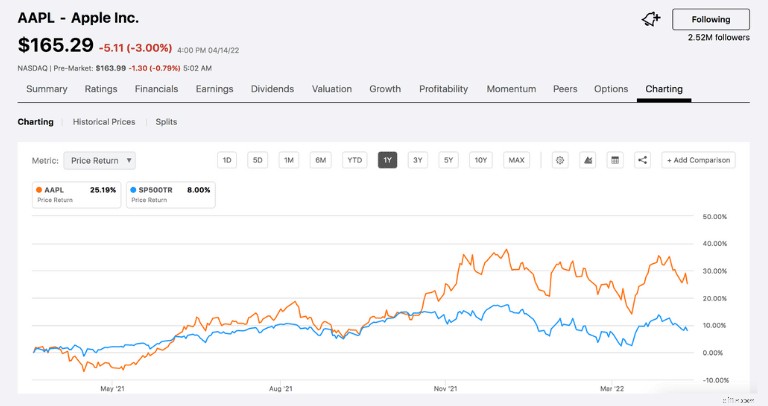
The default comparison is your stock (in this case, Apple) and the S&P 500.
However, if you want to know how apple is doing compared to another individual stock in the tech or a similar sector (like Tesla), then just click on the “+ Add Comparison” button and add your favorite stock:
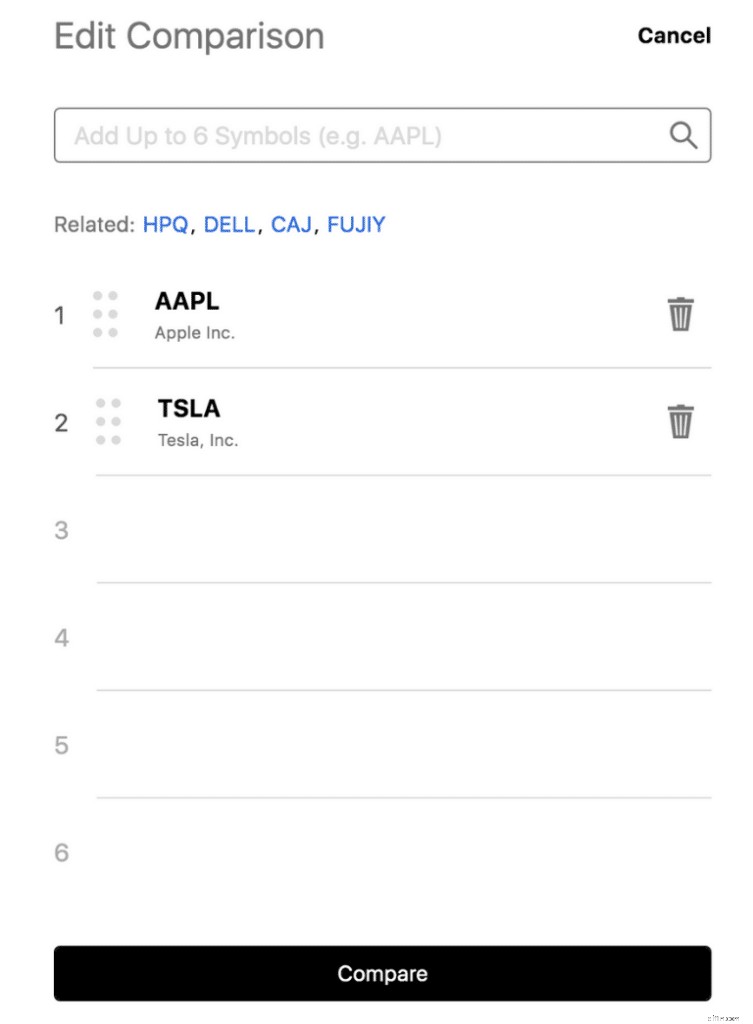
Now take a look at the comparison of Apple stock versus Tesla stock over the past 3 years:
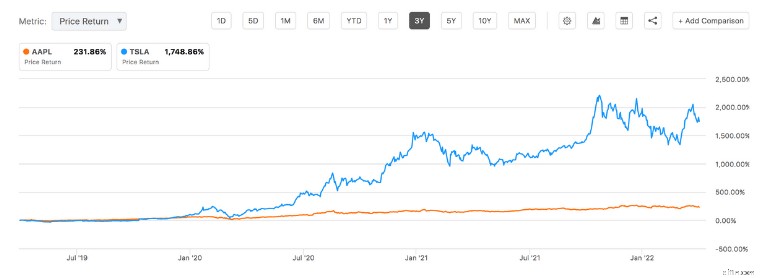
While this stock performance comparison chart shouldn’t be the only tool you should use to determine whether a stock is worth a purchase, it can certainly be a helpful guide.
Premium Plan Feature #20:Link Your Outside Investment Account
Lastly – but certainly not least – another cool feature with the Premium Tier is that you can link your outside investment accounts to your Seeking Alpha account.
Remember that you’ll receive access to Seeking Alpha’s quant comparison tool, the Wall St. Analyst ratings, and the SA Author rankings – along with customizing real-life alerts for each of the stocks you hold.
To start linking your outside accounts, just navigate to your main menu, hover over “My Portfolio” and then click on “Link Brokerage Account.”
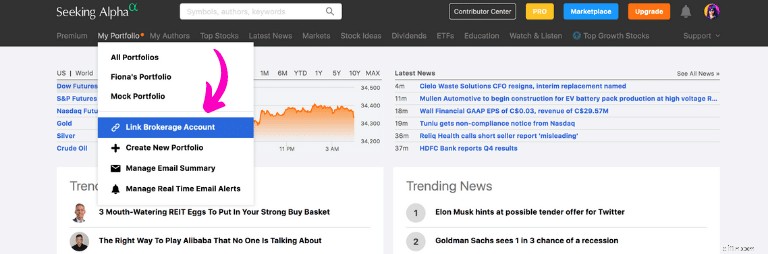
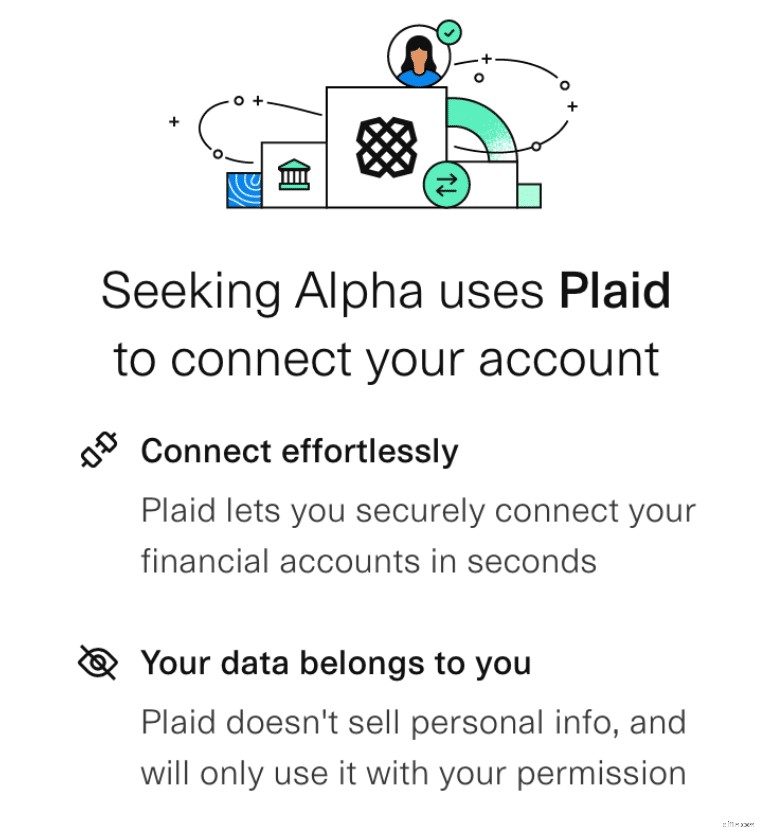
Any outside brokerage accounts that you link will be connected using the secured encryption software, known as Plaid.
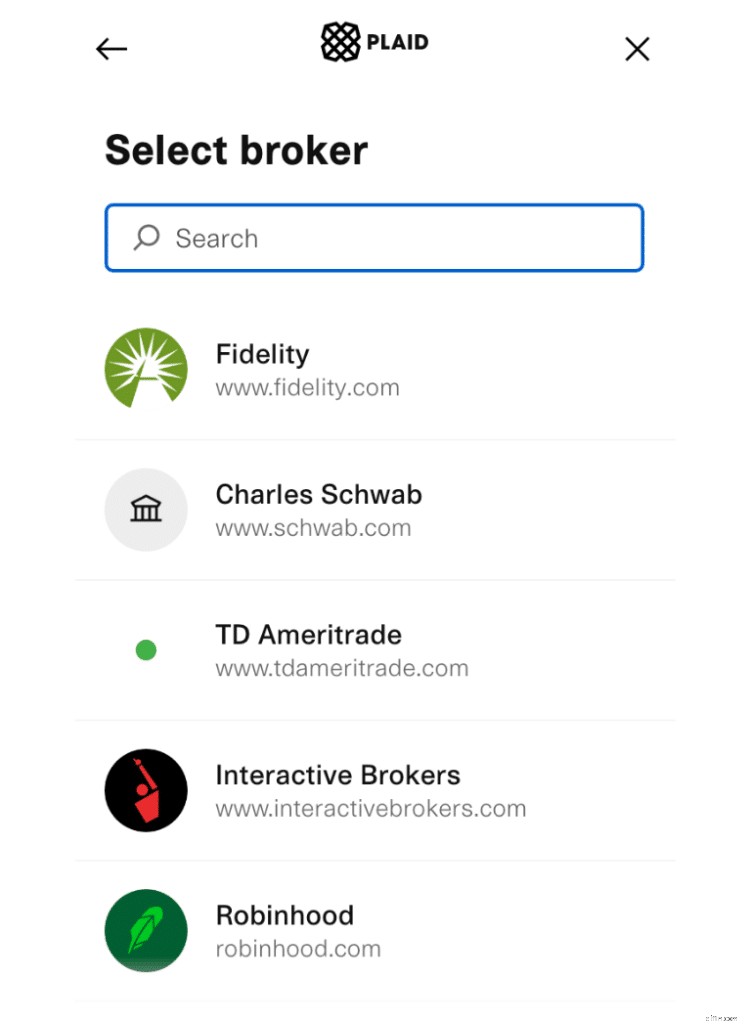
You can select a number of different brokers, such as:
- Acorns
- Fidelity
- Vanguard
- Robinhood
- Charles Schwab
Even if you don’t see your brokerage firm immediately, you can either search for your brokerage firm or sometimes even input the information manually.
Once you’ve established a link to your brokerage account, you can do the following:
- Track your account value
- Sign-up for real-life stock alerts
- Assess the holdings in your accounts
- Aggregate your total liquid net worth in one place
Keep in mind that Seeking Alpha is an informational platform only – you cannot place investment trades on Seeking Alpha.
So to buy or sell stocks in your linked brokerage account, you’ll actually have to sign in to your own investment account.
Recommended Reading:Best Investment Apps
Is Seeking Alpha Premium Right for You?
Seeking Alpha Premium could be right for you if you:
- Enjoy fundamental research
- Want the latest stock market news
- Have some knowledge about investing
- Like to review in-depth stock analyses
- Want to be more involved in the portfolio allocation
Being a Premium Plan member myself, my favorite part is that you can use the Premium tier for as much or as little research as you want.
For example, if you’re thinking about adding Build-A-Bear Workshop, Inc. (BBW) to your portfolio, and you want some additional advice from industry experts.
In this case, just check out the BBW stock rankings in the Ratings Summary section.
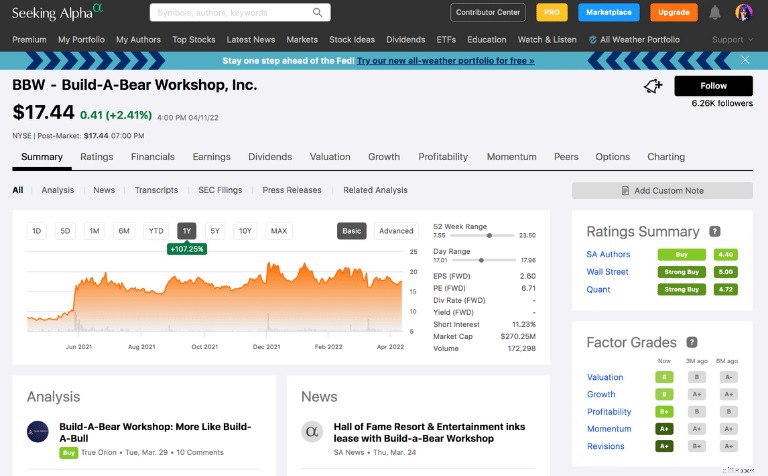
You’ll see that on 3 different instances, the BBW stock is considered a Buy to a Strong Buy opportunity:
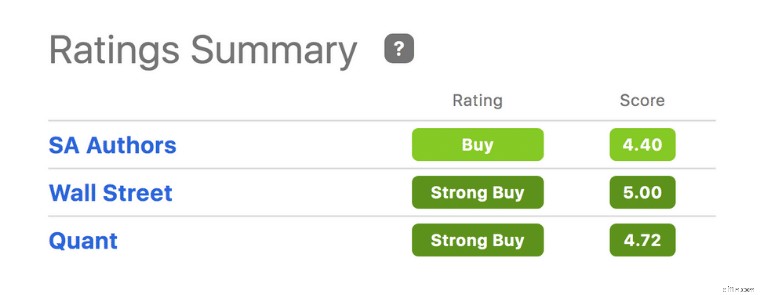
Now, if that’s all the reassurance you were looking for, you can move on and not look back.
However, if you want to drill into more depth with the Build-A-Bear Workshop, Inc. stock, Seeking Alpha lets you do as much fundamental analysis as you want.

The Bottom Line:
The Premium Plan gives intermediate investors the best of both worlds:Reassurance on which stocks to buy, hold, or sell while also going into as much analytical depth as possible.
Seeking Alpha Pro Plan
Just like the Premium Plan, you can also start a 14-day free trial period with the Seeking Alpha Pro Plan .
If you enjoyed the Pro Plan trial period, then you can pay for the Pro Plan in 2 ways:
Monthly Plan
$299.99/month
Annual Plan
$2,400 (or $199.99/month, as advertised)
It appears that the default case for Seeking Alpha is charging the full year’s worth of premiums upfront (so $2,400 in this case).
One of the best benefits to the Pro Plan is that you receive VIP access and Editorial Concierge, customized to your needs.
Keep reading to find out more about the key features of the Pro Plan.
Seeking Alpha Pro Features
In this section, I’ll explain in detail some of the top Pro Plan features and how you can benefit from each (keep in mind that the Pro Plan already comes with the Premium Plan features).
Below is an overview of the additional Seeking Alpha Pro Plan features:
- Ad Free
- Idea Screener
- VIP Editorial Concierge
- Pro content and newsletters
- Top Ideas Recommendation List
Pro Plan Feature #1:Ad-Free
With the Seeking Alpha Pro Plan, your entire user experience will be ad-free.
Remember that the Limited Access version does come with ads and the Premium version offers an ad-lite user experience.
Pro Plan Feature #2:Investment Screener
The Seeking Alpha Pro platform gives you the chance to be as specific as possible when filtering your investments.
You can filter your investments by:
- Investment style
- Geographic location
- Market capitalization
If you know what you’re doing and if you know what you’re looking for, then this investment screener can be used to your advantage.
Pro Plan Feature #3:VIP Editorial Concierge
If you want the bells, the whistles, and the exclusive VIP treatment, then you should consider the Pro Plan.
The editorial team works directly with Pro level subscribers to filter out and pinpoint ideas that fit to your investing needs, style, and preferences.
Pro Plan Feature #4:Pro Content and Newsletters
If you want daily short summaries of the top 1% of the Seeking Alpha content, then your Seeking Alpha Pro level subscription will give you that VIP treatment.
Pro Plan Feature #5:Top Ideas Recommendation List
As a Pro member, you’ll have Seeking Alpha’s industry experts send you a weekly list of their hand-picked top investment ideas from Seeking Alpha contributors.
Is Seeking Alpha Pro Right for You?
Seeking Alpha Pro could be right for you if you:
- Want VIP treatment
- Are an institutional investor
- Are an industry professional
- Make complicated trades (longs, shorts, puts, calls, etc.) and needs the in-depth analyses
Another neat feature is that you could also contribute to the Seeking Alpha community by writing an article with your research and opinion.
The Bottom Line:
The Pro Plan gives advanced investors and industry professionals an in-depth and resourceful experience when researching and analyzing stocks, funds, and ETFs.
Seeking Alpha Customer Service Review
I’ve personally reached out to Seeking Alpha’s customer service on 3 different occasions to evaluate their:
- Knowledge
- Friendliness
- Customer Experience
…And I must say that Seeking Alpha passed my test with flying colors.
Below is my evaluation:
Knowledge
⭐️⭐️⭐️⭐️⭐️
Friendliness
⭐️⭐️⭐️⭐️⭐️
Experience
⭐️⭐️⭐️⭐️⭐️
I’m drawing from my own personal experience from speaking with 3 different Seeking Alpha personal representatives.
The good news is that you can contact Seeking Alpha in 4 main ways:
contactus@seekingalpha.com
Social Media
– YouTube
Navigation Bar
Support Button
Phone Call
347-509-6837
Phone Support Center Hours
Monday to Friday 8am to 4pm EST (holiday hours may apply)
It’s reassuring for me to see the different ways you can contact Seeking Alpha.
While Seeking Alpha is not accredited with the BBB, I was still shocked to see the “F” rating on the BBB website:
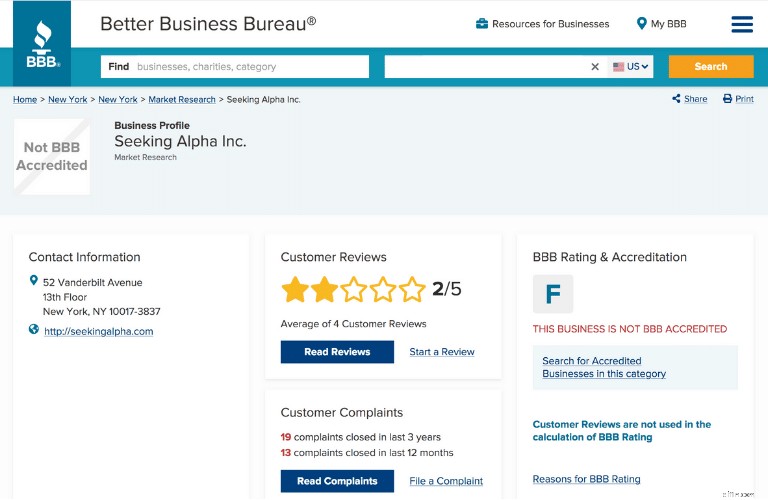
I even double-checked to see if I had the right Seeking Alpha company pulled up on my screen – and I did.
The common complaints appear to only apply to subscribers looking for the “free trial” period:
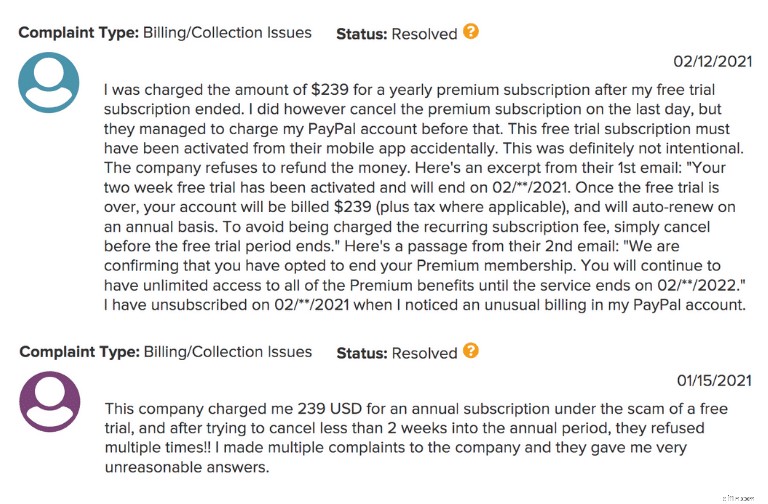
Based on these complaints (which are somewhat recent), it looks like many customers who signed up with the free trial period were charged after the period ended.
Based on this information, if I were signing up to the free trial period, I would probably triple check to read all of the fine print and possibly even cancel before the trial period is over (assuming you’re not happy with the platform).
Now that you have an idea of what people are unhappy about, let’s take a closer look at the ratings on TrustPilot, which is another customer review website.
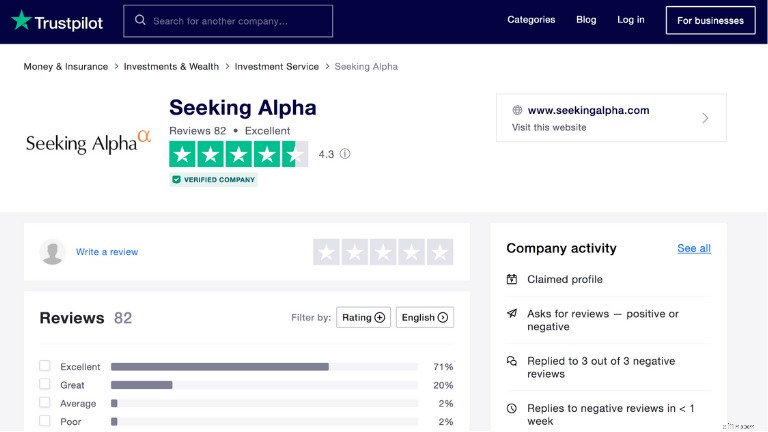
Now, this Trust Pilot customer review is more in line with what I was expecting to see.
On TrustPilot, a solid 93% of respondents rated Seeking Alpha average to excellent.
Some reviews are below:
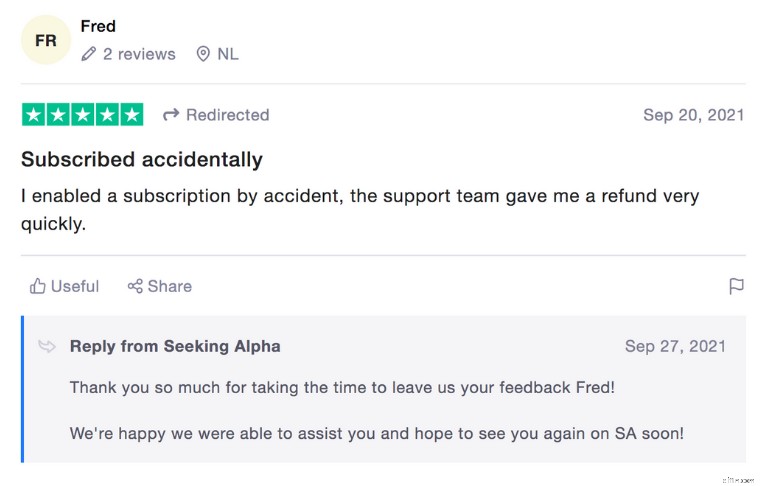
This review virtually contradicts the reviews from the BBB, which said Seeking Alpha did not offer a refund.
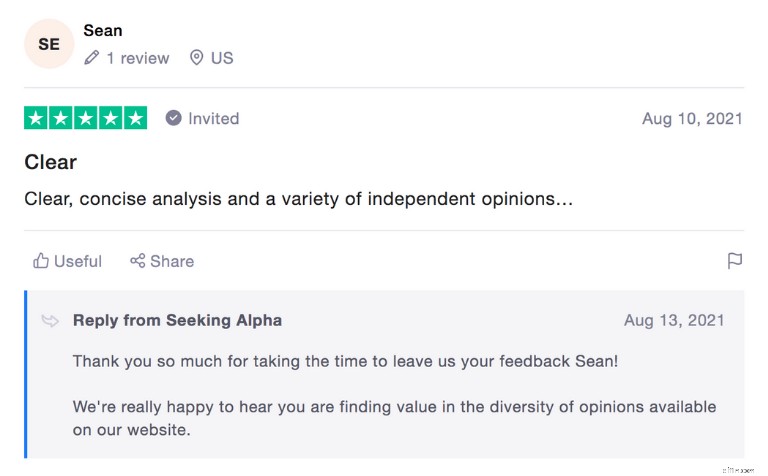
Above is another positive review about the accuracy and impartiality (no bias) of the authors that provide information on Seeking Alpha.
Of the 2 negative reviews that were posted from the 82 total reviews, the complaints were the following:
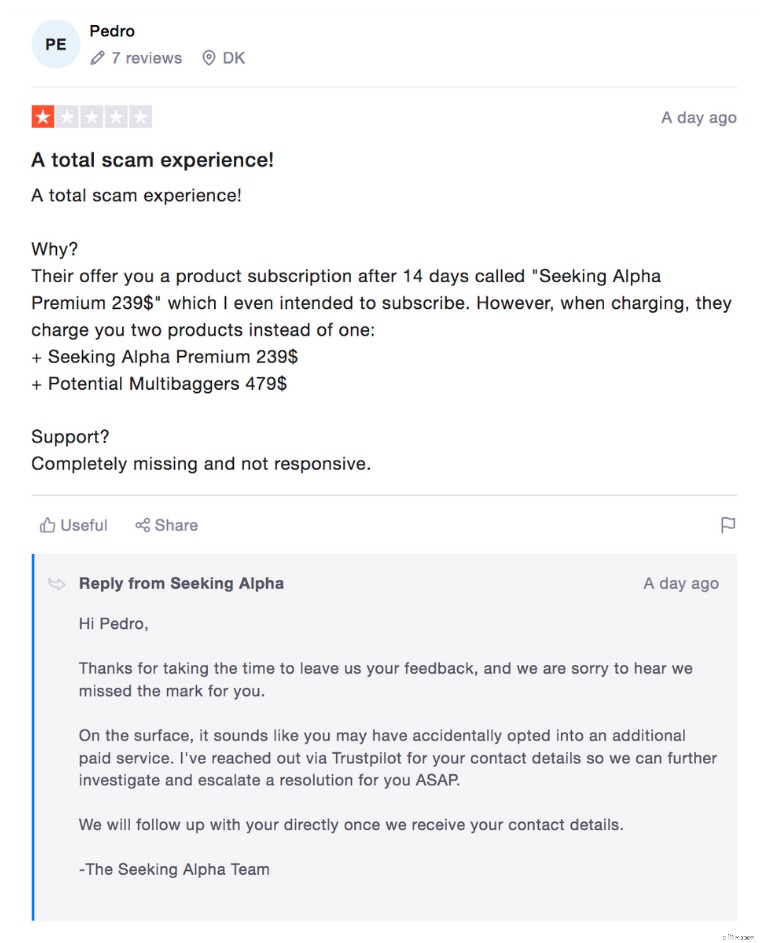
Take a look at the response time of when the negative review was posted (1 day ago) versus the reply from Seeking Alpha (also 1 day ago).
I thought that was impressive.
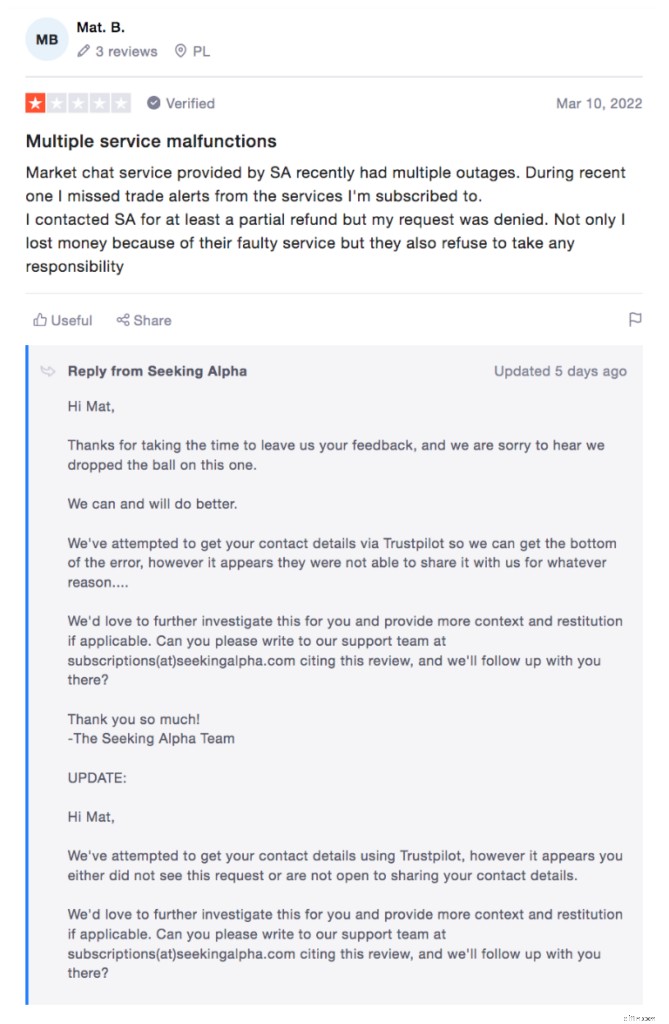
As you can see, there will always be good and bad reviews, and you’ll have to take the reviews with a grain of salt (seriously).
Personally, I like checking back into the customer service review platforms every few months, just to read updates.
The Bottom Line:
Most of the “Bad” Seeking Alpha reviews involve the free subscription service. According to the complaints, immediately after the free trial period ends, the consumer credit card will be charged the annual amount for a paid subscription (likely the Premium subscription).
The Author Vetting Process:Seeking Alpha’s Editors
Now it might sound daunting that Seeking Alpha offers works from 7,000 active monthly authors.
You might even be concerned about the quality of the information if there are so many contributors.
Their team has a pretty quick article turnaround time as well, which typically ranges between 1 hour to a few business days.
Do you have industry expertise and want to contribute?
Below are 9 of the most important requirements to pass the rigorous Seeking Alpha editorial review process:
Market-Oriented
Write about stocks, sectors, ETFs, or other actionable themes for US-based investors
High-Quality
Articles must be convincing, well-presented, and actionable
Fundamental Analysis
Articles must address factors such as a company’s competitors, products, management, corporate strategy, etc.
Originality
Always bring a new perspective to a topic
Compelling Title
Your title shouldn’t overpromise and underdeliver
Market Cap
Articles mentioning stocks trading at less than $1 or companies with market caps less than $100 million will receive extra scrutiny
Clean
You must proofread your article before submission
No Promotional Content
No promotional content in articles
Human Factor
Editors work closely with contributors and maintain a constructive dialogue
As you can see, there are a lot of requirements that go into the making and the publication of a Seeking Alpha article, so chances are that you’ll get the high quality you want.
And with each month, over 10,000 articles are published on Seeking Alpha!
Another neat thing is that you can view a contributor’s past track record of stock predictions.
Another trick to finding information from top ranked authors is just simply clicking on the “Top Authors” button.
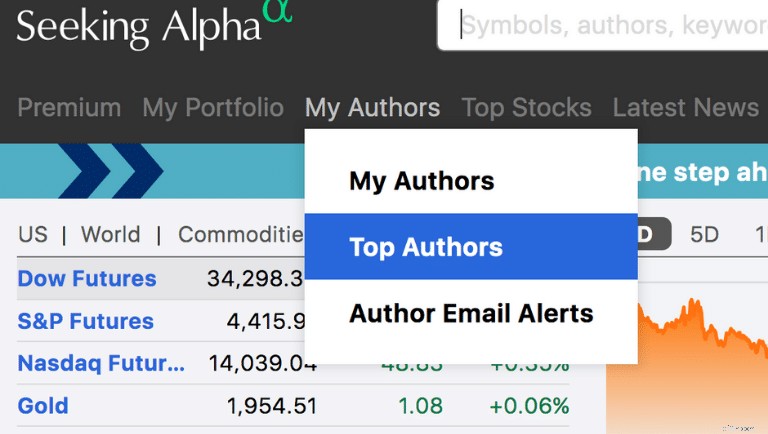
Once in the Top Authors section, you’ll receive a long list of author suggestions, based on their specialty (such as value investing, growth investing, oil &gas investing, etc.).
Seeking Alpha Educational Resources
Another reason why I’m a big fan of Seeking Alpha is because of the abundance of educational resources this platform offers its users:
Investment Videos
Access top investment news videos by clicking on the tab “Watch &Listen” and then clicking on “Videos”
Investment Podcasts
Learn more about the latest investment news by accessing 8 Seeking Alpha podcasts. Click on “Watch &Listen” and then on “Podcasts”
Financial Planning Education
Seeking Alpha knows that investing is just a part of the financial planning process. When you click on the “Education” tab, you’ll gain access to a variety of different financial planning topics, ranging from cryptocurrency to 401(k) management
Seeking Alpha Knowledge Base
Type any question into the search box and you’ll probably find an answer. The Knowledge Base can be accessed by clicking on the “Support” icon and then “Knowledge Base”
Feedback Forum
If you ever have trouble with the Seeking Alpha desktop website or the mobile app, this is the place to share your concerns, feedback, and interact with other users. Access the forum by clicking on the “Support” icon and then “Feedback Forum”
As you can see, Seeking Alpha does not keep you in the dark – when it comes to investing or financial planning-related matters.
One of my favorite learning sections on Seeking Alpha is the “Education” section, where Seeking Alpha users can learn about more than just investing.
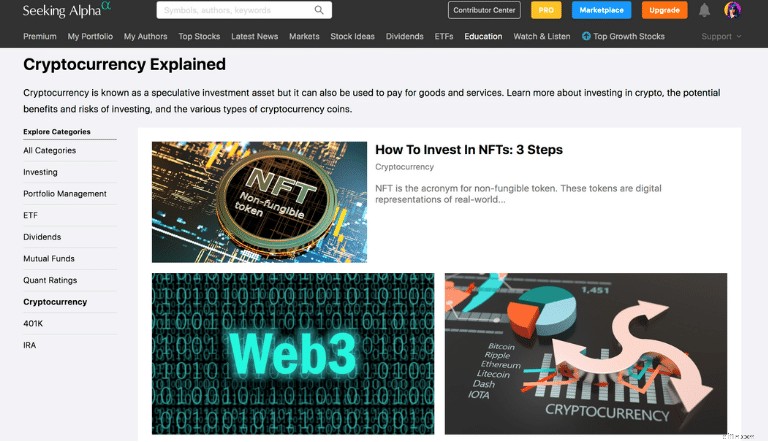
Under the education tab, you access articles about other topics that may not be covered in-depth by the Seeking Alpha Authors.
Some of these topics include:
- REITs
- 401(k)’s
- Cryptocurrency
- Capital gains taxes
I’m also a fan of the “Watch &Listen” section, which offers Seeking Alpha readers access to investment podcasts and videos.
If I’m ever stuck in traffic, I listen to one of the podcasts (I like the Wall Street Breakfast podcast).
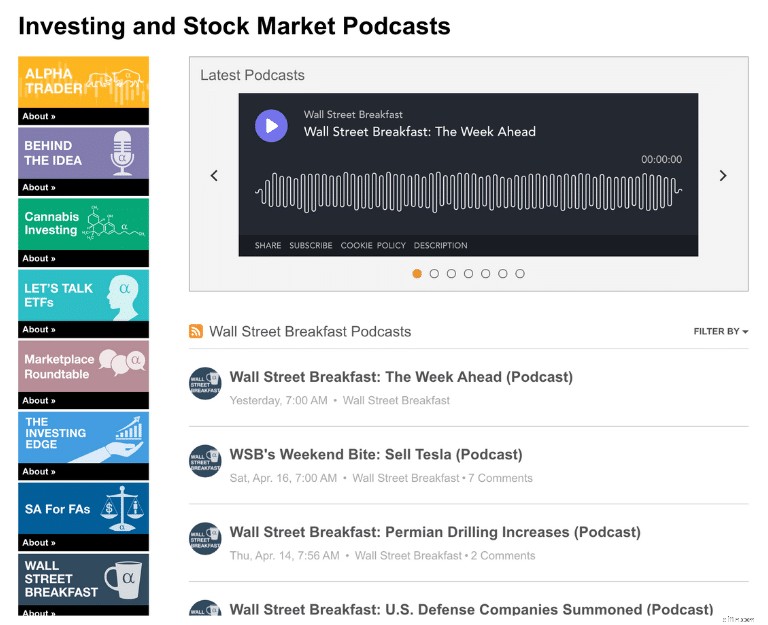
The good news is that Seeking Alpha offers so much variety from which to choose – you’ll never be left without ideas.
How to Open a Seeking Alpha Account
Ready to open an account with Seeking Alpha?
Believe it or not, it’s actually a very fast and simple process.
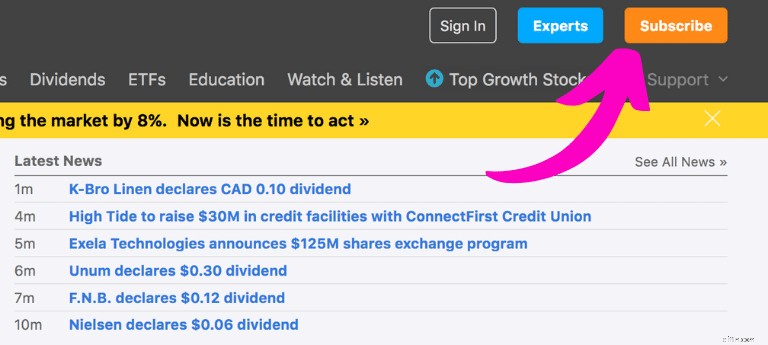
First, head to the Seeking Alpha website and click “Subscribe.”
After you click the subscribe button, you can choose to either start a free trial or register immediately with one of the 3 plans (Limited Access, Premium, or Pro).
Now, if you’re ready to register and pay for your subscription, then select your plan preference.
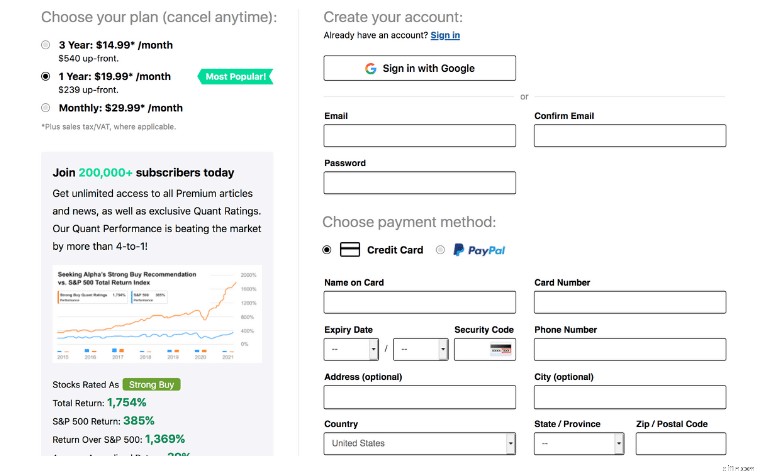
Payment methods are either via credit card or PayPal.
In my opinion, if you’re an investor who really wants to understand more about your investment holdings, then Seeking Alpha is probably a great platform for you.
Is Seeking Alpha Worth it?
Yes, Seeking Alpha is worth the cost if you do your own investment research and want to interact with experienced investors. For $19.99 per month, you get access to exclusive content from over 7,000 experienced investment authors, custom stock performance charts, and portfolio monitoring tools.
If you sign up to the Premium Platform, you can access the Seeking Alpha Quant Ratings, which have outperformed the market since 2010.
The Quant Ratings marked as “Very Bullish” for stocks were up 1,754% versus the market’s 385% gain.
On the other hand, the stocks that were rated as “Very Bearish” by Seeking Alpha really did underperform, being up by only 156% versus the market’s overall 385%.
While I’m not a fan of day trading and stock picking, if I am looking to buy or sell a stock or fund in my portfolio, Seeing Alpha would be my first stop before hitting that “trade” button.
Seeking Alpha Alternatives
Seeking Alpha might not be for everyone.
If you’re an active investor and just don’t like the investment research platform, then you may want to check out platforms like the Motley Fool’s Stock Advisor.
While the cost is certainly lower for new members ($99 per year), you also don’t get access to the customization, the tools, and the crowdsourcing that Seeking Alpha uses.
You can always sign up to the free version of each platform first before committing financially.
FAQ
Is Seeking Alpha Reliable?
Based on Seeking Alpha’s track record, yes, Seeking Alpha is reliable. As an example, Seeking Alpha’s “Very Bullish” stock evaluation ratings have outperformed the market since 2010, up 1,754% versus the market’s 385% gain.
Is Seeking Alpha membership worth it?
Seeking Alpha’s Premium membership is absolutely worth the cost if you want to conduct your own investment research and interact with experienced investors.
You pay $19.99 per month in exchange for exclusive access to content from over 7,000 experienced investment authors, custom stock performance charts, and portfolio monitoring tools.
Is Seeking Alpha Premium worth it?
Yes, Seeking Alpha’s Premium membership is worth the cost if you do your own investment research and want to interact with experienced investors. For $19.99 per month, you get access to exclusive from over 7,000 experienced investment authors, custom stock performance charts, and portfolio monitoring tools.
Is Seeking Alpha still free?
You can still use Seeking Alpha as a free user under the Limited Access plan. However, you can unlock only 5 articles per month before being prompted to sign-up as a paying Premium member. The Premium membership costs $19.99 per month as of early 2022.
Is Seeking Alpha good for day trading?
Seeking Alpha is probably one of the best tools for day traders, active investors, and even swing traders. If you want to do your own investment research and learn from industry experts, then Seeking Alpha really is a good fit.
Who should not buy Seeking Alpha subscription?
If you aren’t a day trader or someone who enjoys researching and picking stocks for their portfolio, then Seeking Alpha is probably not for you. For example, passive investors who use mutual funds, index funds, or even ETFs probably won’t find too much value from the Seeking Alpha platform.
Who Created Seeking Alpha?
Seeking Alpha was founded by David Jackson in 2004. Jackson is a graduate of Oxford University (undergraduate) and The London School of Economics (graduate).
He worked as a technology research analyst at Morgan Stanley, where Jackson saw a problem (the conflict of interest stemming from investment banks publishing information about the products they sell) and developed a solution with the unbiased Seeking Alpha platform.
Seeking Alpha Review:The Bottom Line
Seeking Alpha is likely one of the best platforms if you want to:
- Research your own stocks
- Get the latest stock market news
- Customize your stock performance
- Receive live stock push notifications
- Learn from and interact with industry experts
In my opinion, the biggest benefit you get from Seeking Alpha is the unbiased research.
For example, you won’t find research articles about funds written by the very company that sells the same fund.
There is no conflict of interest with Seeking Alpha, just pure authenticity and knowledge shared by industry experts.
You can access Seeking Alpha through 3 plans:
- Limited Access Plan
- Premium Plan
- Pro Plan
If you’re really planning to use Seeking Alpha as a way to evaluate your portfolio, research stocks, and learn (and interact) with investment industry experts, then you’ll probably want to sign up with the Premium Plan .
The Premium Plan offers the following features:
- Gain exclusive &unlimited access to expert articles
- Brainstorm your next stock picks with investment professionals
- Accurate and reliable stock recommendations (from both authors and Seeking Alpha’s quantitative analysis)
- Customize and compare your stock performance against a peer’s performance
- Track and learn more about your personal portfolio’s allocation and performance
The list really does keep going, but you get my point.
The Premium Seeking Alpha plan offers a lot of benefits, and that’s the plan that I’m using myself right now.
The Bottom Line:
What I really like about Seeking Alpha is that this investment research platform truly is a democratized platform that shares quality ideas and insights from industry experts.
Now I’d like to hear from you:
What are your thoughts on Seeking Alpha?
Would you consider opening an account with this platform?
Let me know in the comments section below.
-

Que signifie un salaire de 9K ?
Un salaire de 9K équivaut à 9 $, 000 en rémunération annuelle. Pour une raison curieuse, lorsque nous discutons du sujet de largent, la lettre K en est venue à représenter le mot mille. K est un symb
-
Bonus d'épargne Bank of America
Lorsque vous ouvrez un nouveau compte auprès dune nouvelle banque ou dune banque avec laquelle vous travaillez déjà, une question importante à se poser est de savoir sil existe des bonus disponibles.
Finances Personnelles
- ZenBusiness vs JuridiqueZoom
- Plus de croisières Carnival annoncées pour les voyageurs vaccinés
- Un bon crédit est encore plus important qu'on ne vous l'a dit :voici pourquoi
- Mise à jour de la relance :4 raisons pour lesquelles les Américains pourraient avoir besoin de plus d'argent de relance en 2022
- Les frais médicaux frappent durement les parents, L'enquête montre
- Les employeurs prévoient des augmentations plus importantes en 2022 qu'en 2021 - mais ils pourraient encore échouer
- Le taux de chômage aux États-Unis baisse en mai avec la création de plus de 500 000 emplois
- Les 7 remboursements de dettes qui augmentent le plus votre pointage de crédit
- 5 compétences de bricolage qui vous feront économiser de l'argent, et 5 qui n'en valent pas la peine
-
 11 étapes pour améliorer votre pointage de crédit
 Votre pointage de crédit joue un rôle important dans de nombreux aspects de votre vie, du taux que vous obtenez sur un prêt automobile à la réussite dune vérification des antécédents pour lemploi de v...
-
 Qu'est-ce que la courbe des rendements ?
 La courbe de rendement est un graphiqueTypes de graphiquesTop 10 des types de graphiques pour la présentation des données que vous devez utiliser - exemples, des astuces, mise en page, comment les uti...